
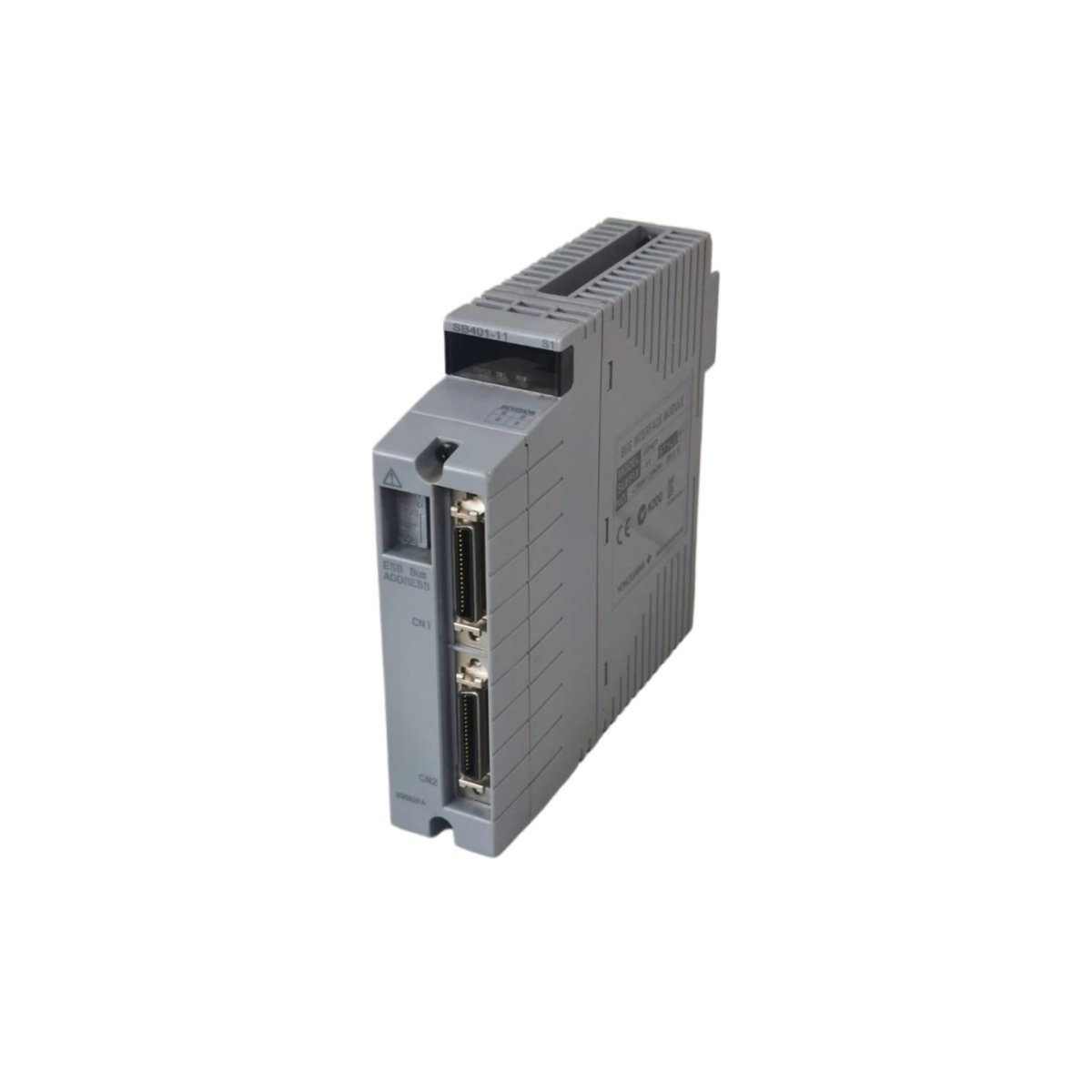
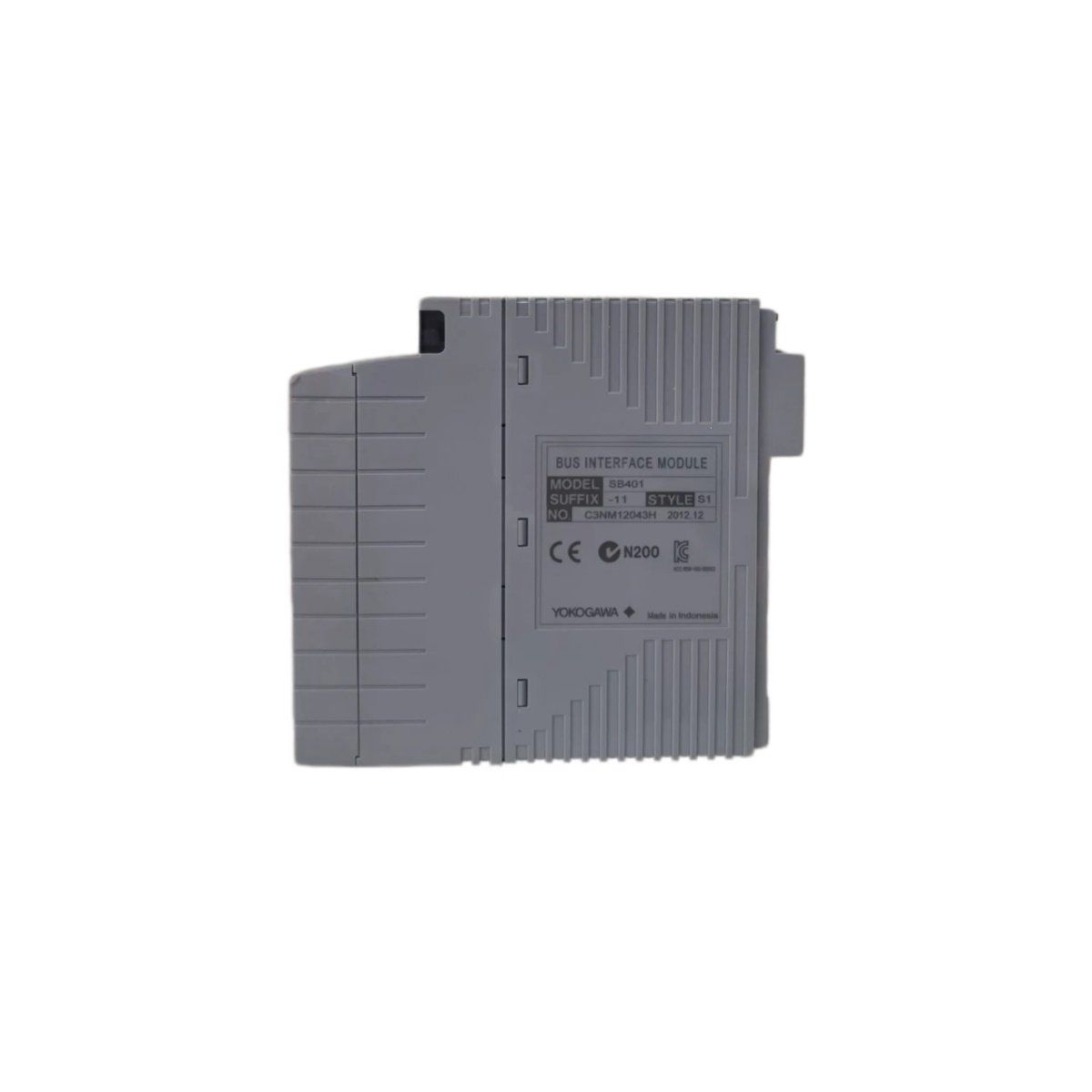
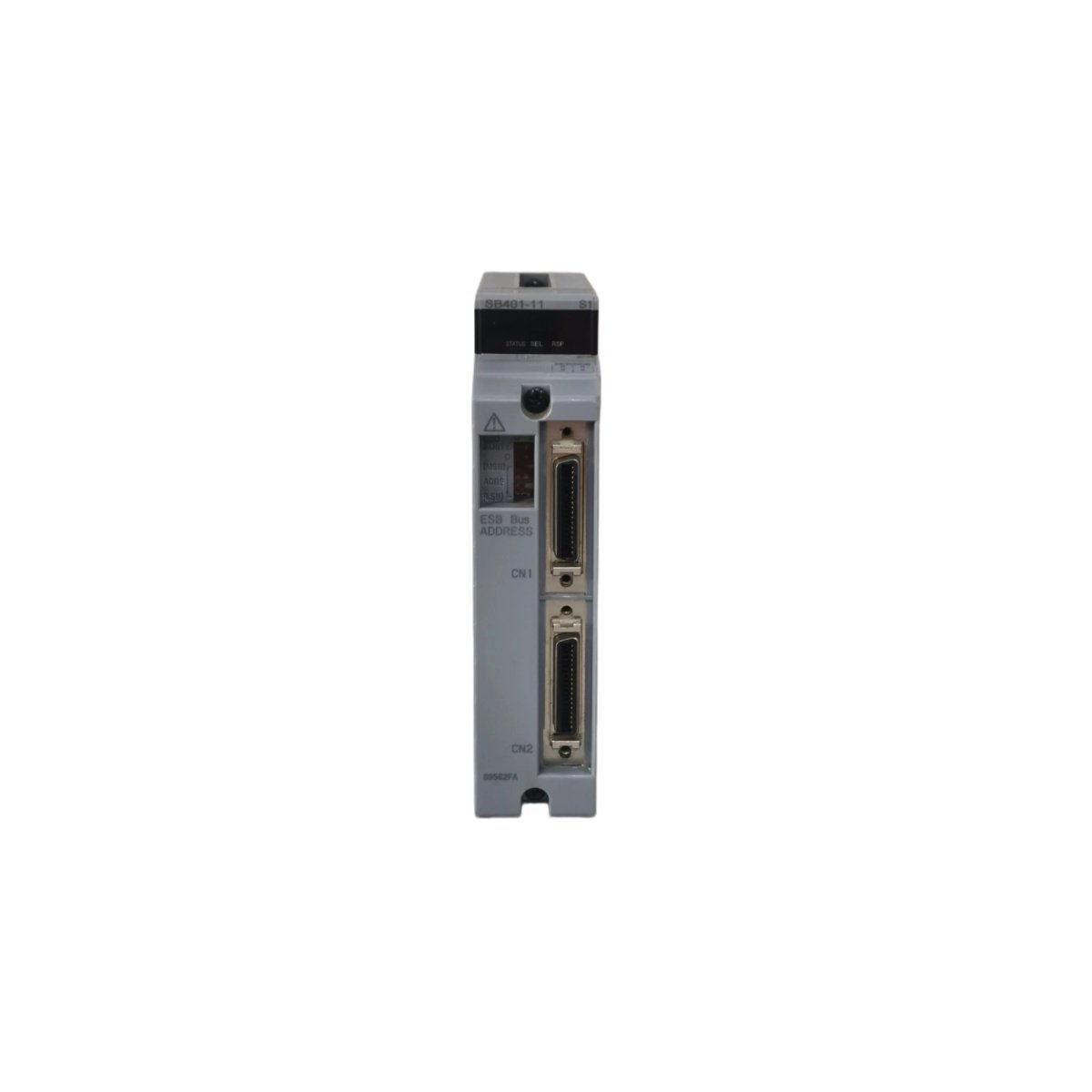
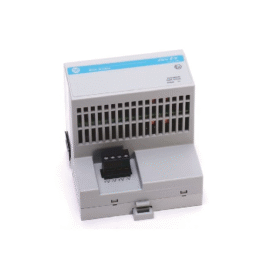
The SB401-11 works as an ESB bus interface slave module within Yokogawa control architectures. This unit manages data exchange between the ESB bus and connected I/O modules. Engineers rely on its stable communication behavior for distributed process control.
Key Technical Specifications
| Parameter | Value |
|---|---|
| Product Type | ESB Bus Interface Slave Module |
| Compatibility | Yokogawa Control and Measurement Systems |
| Module Width | Compact single-width housing |
| Weight | Approximately 0.5 kg |
| Interface Type | ESB bus connection port |
| Communication Role | Slave station on ESB bus network |
| Data Transfer | High-speed bus data exchange |
| Connector Count | Integrated bus and power terminals |
| Isolation | Bus-to-system signal isolation |
| Power Supply | Standard industrial DC supply |
| Operating Temperature | 0°C to 55°C |
| Storage Temperature | -20°C to 70°C |
| Mounting Style | Panel or rack mounting |
Functional Overview
This module handles data traffic between the ESB bus and local I/O units. Consequently, it keeps communication synchronized across distributed control stations. The SB401-11 operates as a slave station within the ESB network. Therefore, system integrators extend control reach without sacrificing response speed.
Integration and Compatibility
The SB401-11 connects directly to compatible Yokogawa control systems. Additionally, it links to ESB bus segments through an integrated bus port. This arrangement reduces cabling effort and simplifies system expansion. Furthermore, the module maintains stable transmission across extended operation periods.
Typical Applications
Manufacturers deploy this interface in distributed control, remote I/O, and process automation systems. Moreover, it suits applications requiring dependable bus communication. The SB401-11 excels where synchronized data exchange matters most.
Details
| Weight | 0.35 kg |
|---|---|
| Dimensions | 120 × 52 × 125 mm |
Reviews
There are no reviews yet.