
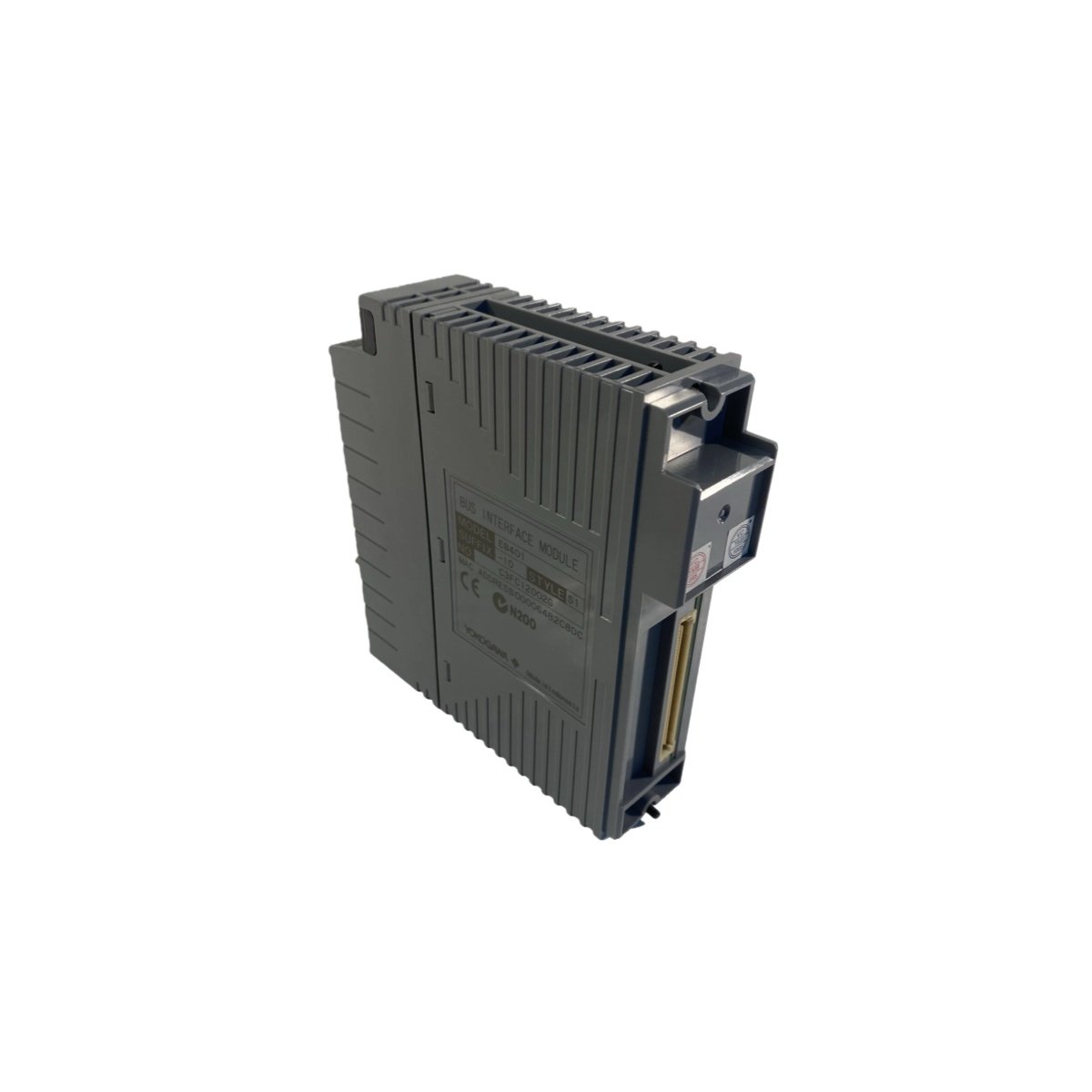
Primary Bus Control Function
This bus interface master module manages communication between the DCS controller and remote I/O nodes. It orchestrates data exchange across the entire fieldbus network with deterministic precision. You can deploy this module in large-scale distributed control architectures. The master actively polls each connected slave device for input status updates. It also broadcasts output commands to all field devices within each scan cycle. This module serves as the central traffic controller for Yokogawa automation networks.
Physical Dimensions and Rack Integration
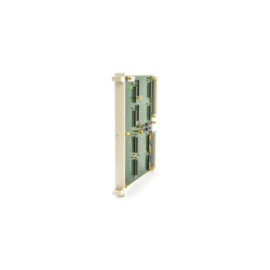
The Yokogawa EB401 measures 250.0 mm in height and 45.0 mm in width. Its depth reaches 180.0 mm from the front panel to the backplane connector. This unit weighs approximately 1.55 kg, requiring careful handling during installation. You can slide this module into any standard Yokogawa chassis slot. Two ejector levers with locking tabs secure the unit firmly in position. The aluminum housing provides effective heat dissipation and electromagnetic shielding.
Communication Protocol and Data Management
This master module utilizes Yokogawa’s proprietary fieldbus protocol for high-speed data exchange. It supports a maximum of 64 slave devices on a single network segment. The Yokogawa EB401 manages both cyclic and acyclic data transfer modes effectively. You can configure the scan cycle time from 10 milliseconds to 100 milliseconds. The module automatically detects and reconfigures the network topology. This flexibility suits a wide variety of distributed I/O configurations.
Bus Interface and Physical Connectivity
The module provides two isolated RS-485 ports for redundant bus connections. Each port supports baud rates up to 2.0 Mbps for high-speed communication. The Yokogawa EB401 includes LED indicators for bus activity and error status. A dedicated diagnostic port allows local access for troubleshooting and commissioning. The backplane connector provides power and data pathways to the host controller. This interface architecture ensures reliable communication even in noisy industrial environments.
Processor Resources and Data Buffering
The module houses a 16-bit microcontroller running at 40 MHz clock speed. It incorporates 512 KB of SRAM for input/output data buffering. The Yokogawa EB401 also includes 256 KB of flash memory for firmware storage. A separate 32 KB EEPROM retains network configuration parameters permanently. The processor handles error checking and retransmission of corrupted messages. This processing capability ensures data integrity across the entire network.
Network Scanning and Node Management
This master automatically scans for newly connected slave devices on power-up. It maintains a dynamic table of active nodes and their communication status. The Yokogawa EB401 monitors each slave device’s health and reports any communication errors. You can configure individual timeout values for each connected device. The module also implements a watchdog timer for detecting network cable faults. This active management enhances overall system reliability and diagnostic capabilities.
Internal Component Architecture
The main PCB contains over 150 discrete components including communication controllers. You will find high-speed optocouplers providing 2.5 kV isolation for the bus ports. The Yokogawa EB401 uses a precision oscillator for accurate timing synchronization. A dedicated bus transceiver drives the RS-485 signals with robust current capacity. The board includes transient voltage suppressors on all external connections. This component selection ensures reliable operation in demanding industrial conditions.
Power Consumption and Energy Storage
This bus master draws 380 mA from the 5 VDC backplane supply during operation. It also consumes 80 mA from the 24 VDC field power input. An internal 0.22 F supercapacitor provides short-term energy for orderly shutdown. This capacitance sustains the module during brief power interruptions. The unit also features a replaceable 3.0 V lithium battery for clock backup. This battery maintains the real-time clock for over 5 years.
Environmental Ratings and Operational Limits
The Yokogawa EB401 operates reliably between 0°C and 60°C ambient temperature. It withstands relative humidity from 10% to 95% without condensation effects. The enclosure meets IP20 protection standards for indoor control room installations. Vibration tolerance reaches 2 G from 10 Hz to 150 Hz on each axis. Shock resistance measures 15 G for 11 milliseconds half-sine pulses. These specifications suit chemical, petrochemical, and power generation facilities.
Technical Data Summary
| Parameter | Specification |
|---|---|
| Brand | Yokogawa |
| Model | EB401 |
| Type | Bus Interface Master Module |
| Dimensions (H × W × D) | 250.0 × 45.0 × 180.0 mm |
| Weight | 1.55 kg |
| Protocol | Yokogawa proprietary fieldbus |
| Maximum Nodes | 64 slave devices |
| Communication Ports | RS-485 (×2), isolated |
| Baud Rate | Up to 2.0 Mbps |
| Scan Cycle | 10 to 100 ms (configurable) |
| Processor | 16-bit, 40 MHz |
| Data Buffer | 512 KB SRAM |
| Firmware Memory | 256 KB Flash |
| Configuration Memory | 32 KB EEPROM |
| Backplane Current | 380 mA at 5 VDC |
| Field Current | 80 mA at 24 VDC |
| Isolation | 2.5 kV optocouplers |
| Supercapacitor | 0.22 F |
| Battery | 3.0 V Lithium (5+ years) |
| Temperature Range | 0 to 60 °C |
| Protection Rating | IP20 |
Diagnostic Features and Status Indication
This module includes multiple LED indicators for comprehensive status monitoring. Green LEDs show power, run, and network activity for each port. Red LEDs alert you to communication errors or node failures. You can access detailed diagnostic logs through the programming software. The module also stores the last 50 error events in non-volatile memory.
Details
| Weight | 1.55 kg |
|---|---|
| Dimensions | 250 × 45 × 180 mm |
Reviews
There are no reviews yet.