
Central Control Function and System Role
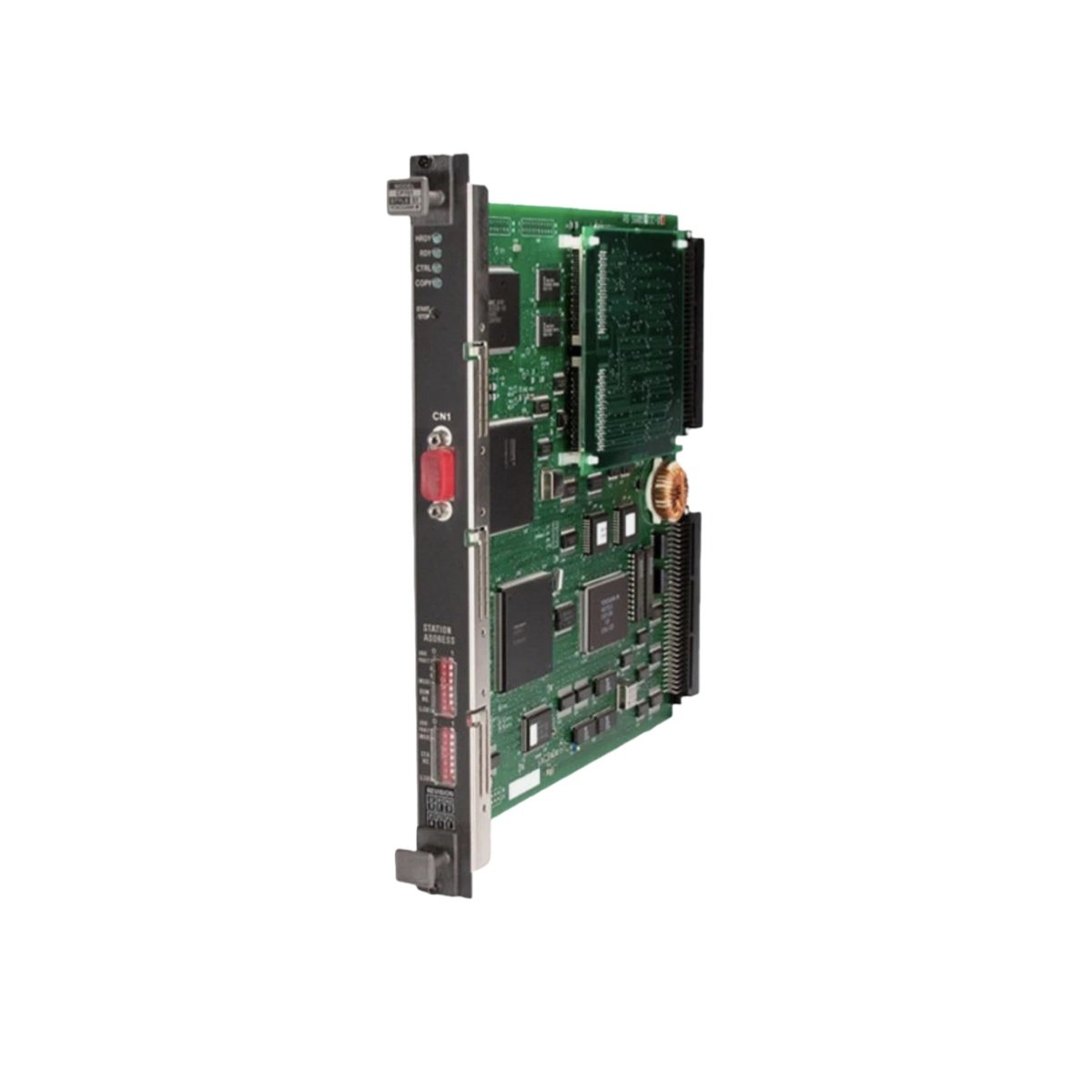
This CPU module functions as the primary controller for Yokogawa process automation systems. It executes complex regulatory and sequential control strategies with high precision. You can install this module in central control rooms or remote equipment cabinets. The processor handles multiple control loops and data acquisition tasks simultaneously. It coordinates all I/O scanning and network communication activities across the system. This control engine supports critical applications in oil, gas, and chemical processing industries.
Physical Dimensions and Rack Installation
The Yokogawa CP703 measures 250.0 mm in height and 42.0 mm in width. Its depth reaches 175.0 mm from the front panel to the backplane connector. This unit weighs approximately 1.50 kg, requiring careful handling during installation. You can slide this module into any standard Yokogawa chassis slot. Two locking ejector levers secure the unit firmly in its operational position. The aluminum housing provides effective heat dissipation and electromagnetic interference protection.
Processor Architecture and Execution Performance
This module features a 32-bit RISC processor operating at 80 MHz core speed. It executes user programs with a typical scan time of 6 milliseconds per 1,000 steps. The Yokogawa CP703 supports floating-point calculations and advanced PID algorithms natively. It processes both ladder logic and structured text programming languages efficiently. The CPU includes a hardware watchdog timer for automatic system recovery. This performance level suits mid-range process control and batch sequencing applications.
Memory Resources and Data Management
The module contains 2 MB of flash memory for firmware and application program storage. It also provides 1 MB of battery-backed SRAM for process variables and historical data. The Yokogawa CP703 includes 64 KB of EEPROM for system configuration parameters. You can partition the SRAM into trend logs and event history buffers. The flash memory allows firmware upgrades without hardware replacement. The battery maintains all critical data during extended power interruptions.
Communication Interfaces and Network Connectivity
This CPU offers two isolated RS-485 ports for remote I/O node connections. It also includes one 10Base-T Ethernet port for plant network integration. The Yokogawa CP703 provides a dedicated RS-232 port for programming and diagnostics. You can connect operator interface panels through the secondary serial channel. The Ethernet port supports Modbus TCP and Yokogawa’s proprietary communication protocols. These interfaces ensure seamless integration with existing automation infrastructure.
Internal Component Architecture
The main PCB contains a high-performance memory controller and bus arbitration logic. You will find precision voltage regulators for stable internal power distribution. The Yokogawa CP703 uses a quartz crystal oscillator with ±50 ppm frequency stability. A dedicated communication controller manages the I/O bus traffic efficiently. The board contains over 180 individual components including ICs, resistors, and capacitors. This design prioritizes reliability for 24/7 continuous operation environments.
Power Consumption and Backup Provisions
This CPU module draws 550 mA from the 5 VDC backplane supply under full load. It also consumes 120 mA from the 24 VDC field power input. An internal 3.0 V lithium battery provides backup for the SRAM and real-time clock. This battery delivers a service life exceeding 5 years in normal operation. The module also incorporates a 0.33 F supercapacitor for temporary data retention. This supercapacitor maintains memory contents for 48 hours during battery changes.
Environmental Ratings and Operational Limits
The Yokogawa CP703 operates reliably between 0°C and 55°C ambient temperature. It withstands relative humidity from 10% to 90% without condensation effects. The enclosure meets IP20 protection standards for indoor control room use. Vibration tolerance reaches 2 G from 10 Hz to 150 Hz along each axis. Shock resistance measures 15 G for 11 milliseconds half-sine pulses. These specifications make it suitable for pharmaceutical and food processing facilities.
Technical Data Summary
| Parameter | Specification |
|---|---|
| Brand | Yokogawa |
| Model | CP703 |
| Type | CPU Module |
| Dimensions (H × W × D) | 250.0 × 42.0 × 175.0 mm |
| Weight | 1.50 kg |
| Processor | 32-bit RISC, 80 MHz |
| Program Memory | 2 MB Flash |
| Data Memory | 1 MB SRAM (battery-backed) |
| Configuration Memory | 64 KB EEPROM |
| Scan Time | 6 ms per 1,000 steps |
| Communication Ports | RS-485 (×2), Ethernet, RS-232 |
| Ethernet Speed | 10Base-T |
| Backplane Current | 550 mA at 5 VDC |
| Field Current | 120 mA at 24 VDC |
| Battery | 3.0 V Lithium (5+ years) |
| Supercapacitor | 0.33 F (48 hrs retention) |
| Temperature Range | 0 to 55 °C |
| Protection Rating | IP20 |
Diagnostic Features and Operator Interface
This module includes a front-panel LCD display for real-time status monitoring. Four pushbuttons allow you to navigate diagnostic menus and view system parameters. The display shows CPU utilization, memory usage, and error statistics. Three LED indicators provide power, run, and fault status information. The module also supports remote diagnostics through the Ethernet connection.
Details
| Weight | 1.50 kg |
|---|---|
| Dimensions | 250 × 42 × 175 mm |
Reviews
There are no reviews yet.