
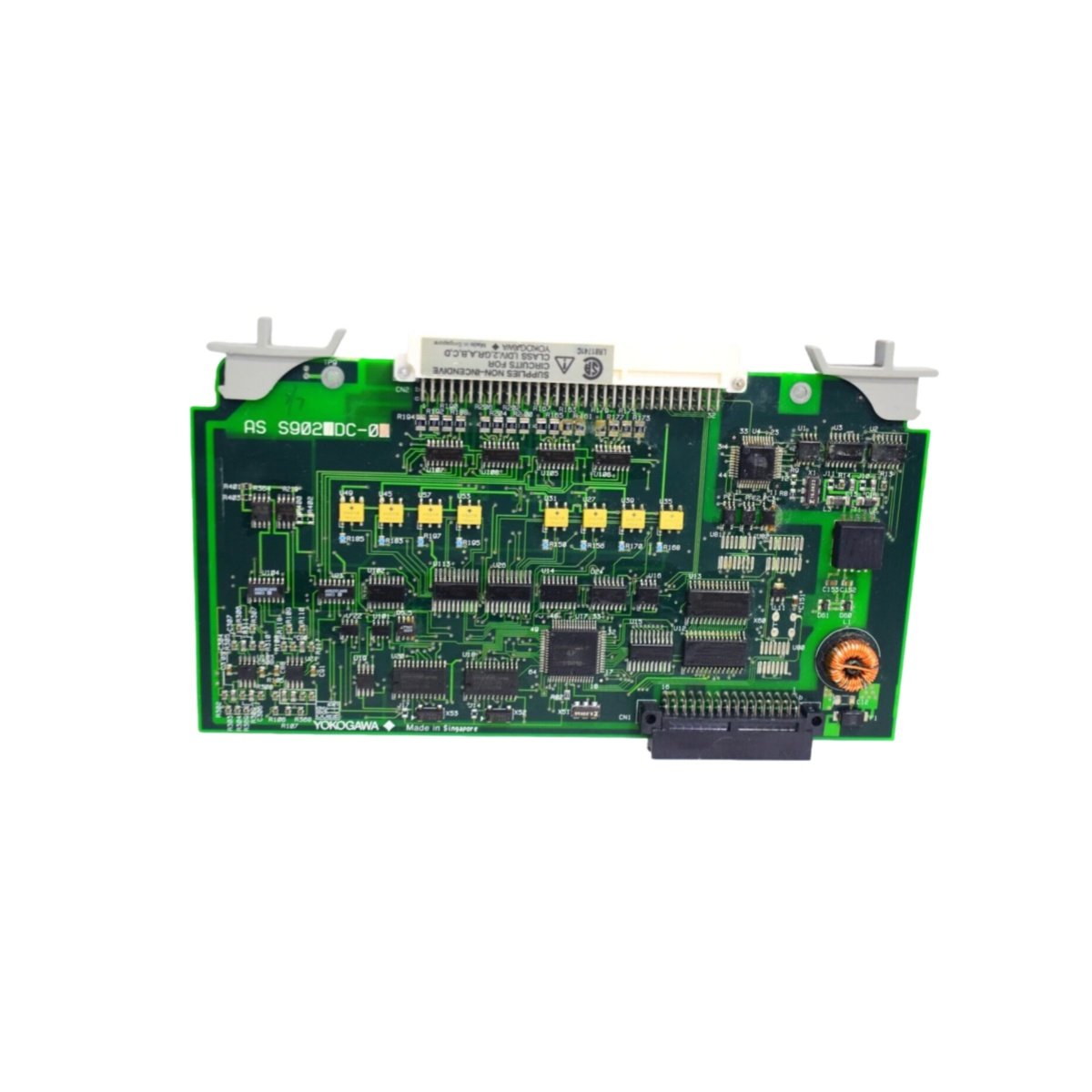
The Yokogawa AMM32CJ delivers high-precision temperature readings for industrial processes. This module multiplexes multiple RTD sensors into a unified data channel. It directly interfaces with Pt100 and Ni100 resistance elements. You will obtain stable measurements across diverse operating conditions. This multiplexer serves petrochemical, pharmaceutical, and food processing industries.
Physical Dimensions and Installation Specifications
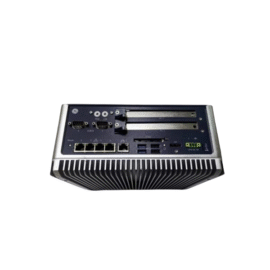
This module features a compact, rugged enclosure for panel mounting. Its physical dimensions are 125 mm in height, 30 mm in width, and 115 mm in depth. It weighs approximately 0.5 kilograms for straightforward installation. The operating temperature ranges from -20°C to +70°C. This broad range supports installations in both indoor and outdoor environments.
Input Channel Configuration and Sensor Wiring
The Yokogawa AMM32CJ accommodates up to 16 RTD input channels. Each channel accepts 2-wire, 3-wire, or 4-wire sensor configurations. The 3-wire connection effectively compensates for lead resistance errors. This compensation proves essential when sensors locate far from the control cabinet. The module applies a constant current source to each RTD element. This current remains unaffected by fluctuations in supply voltage.
Signal Processing and Data Conversion
This module converts each resistance reading using 18-bit analog-to-digital conversion. It then translates these values into degrees Celsius or Fahrenheit. The internal processor executes linearization routines for optimal accuracy. The Yokogawa AMM32CJ stores all calibration data in onboard EEPROM memory. This non-volatile storage preserves settings through unexpected power failures. Therefore, you regain normal operation quickly after restarts.
Connection Interface and Status Indication
A front-mounted terminal strip simplifies all field wiring connections. This strip accepts wire gauges up to 1.5 mm² for secure terminations. The module provides individual LED indicators for every input channel. These LEDs signal normal operation, open circuit, or over-scale conditions. The Yokogawa AMM32CJ performs continuous self-diagnostics during active operation. This ongoing assessment alerts operators to potential sensor issues promptly.
Component Composition and Build Quality
This device contains approximately 78 discrete electronic components. Engineers select precision resistors and low-drift amplifiers for the analog path. The PCB receives a conformal coating for moisture and dust protection. This coating enhances reliability in humid or dirty environments.
Technical Specifications Summary
| Parameter | Specification |
|---|---|
| Dimensions (H × W × D) | 125 mm × 30 mm × 115 mm |
| Weight | Approx. 0.5 kg |
| Operating Temp | -20°C to +70°C |
| Input Channels | 16 RTD inputs |
| Sensor Types | Pt100, Ni100 |
| Wiring Options | 2-wire, 3-wire, 4-wire |
| Resolution | 18-bit |
| Storage | Onboard EEPROM |
| Terminal Capacity | Up to 1.5 mm² |
Noise Suppression and Measurement Integrity
The Yokogawa AMM32CJ integrates advanced digital filtering for noise rejection. This technique effectively attenuates 50 Hz and 60 Hz interference signals. The module also compensates for cold junction temperature variations at the terminals. It provides high common-mode rejection for electrically noisy plant floors. You receive accurate data even near variable-frequency drives or welding equipment.
Details
| Weight | 0.5 kg |
|---|---|
| Dimensions | 125 × 30 × 115 mm |
Reviews
There are no reviews yet.