
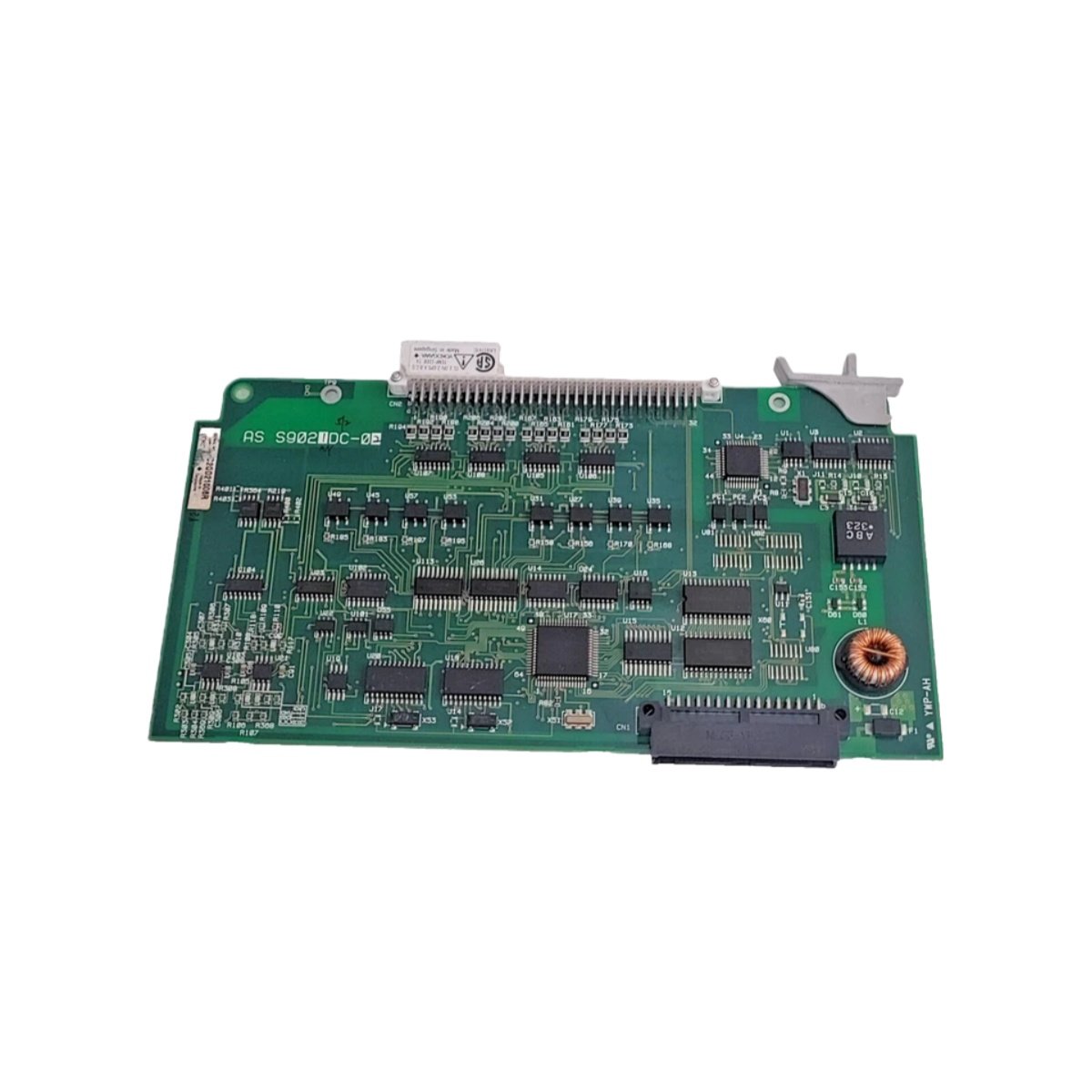
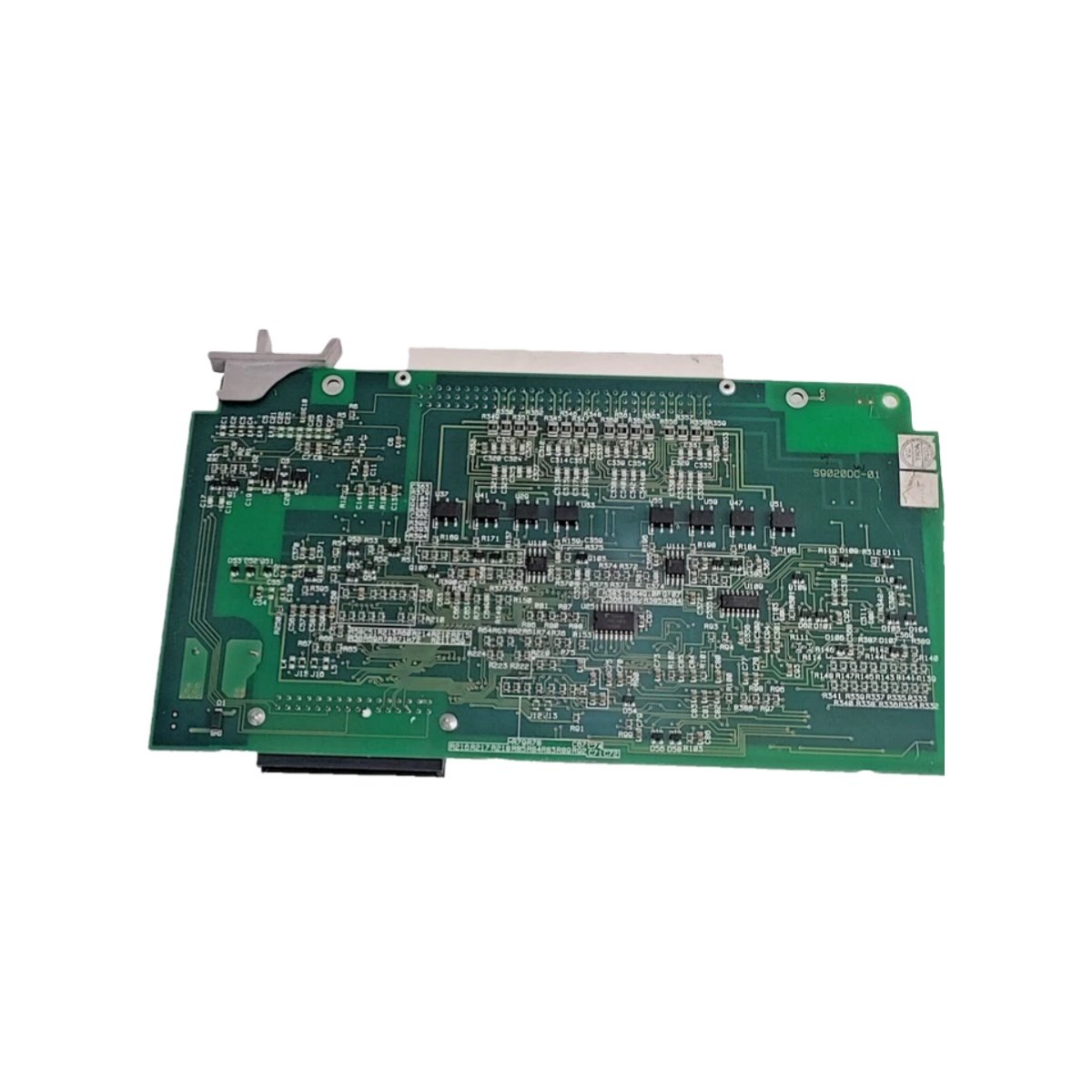
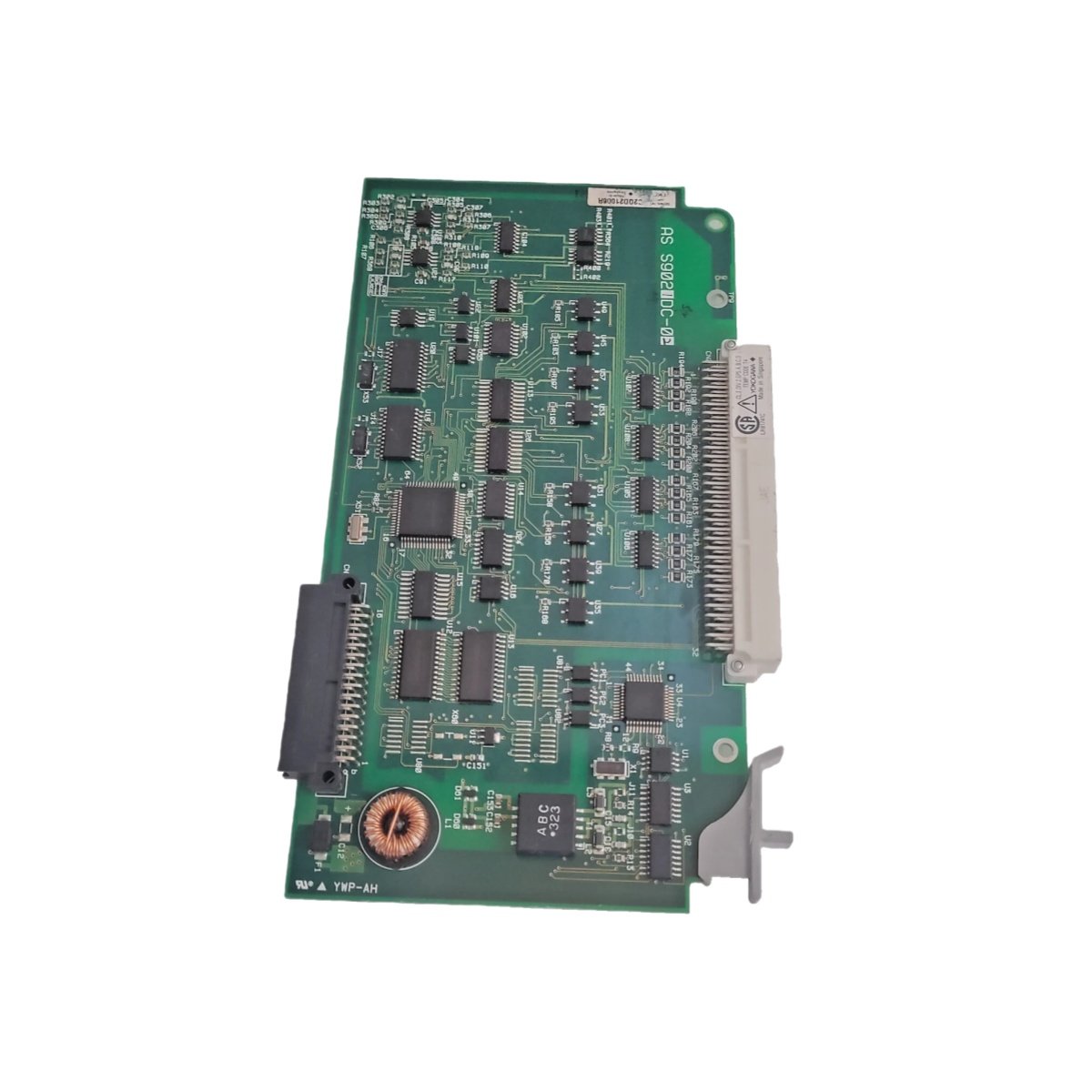
The Yokogawa AMM32C provides accurate temperature measurement for critical processes. This module multiplexes multiple RTD sensor inputs into a single data stream. It directly connects to Pt100 and Ni100 resistance temperature detectors. You will achieve precise readings across wide temperature ranges. This multiplexer excels in chemical, power, and refining applications.
Physical Dimensions and Installation Profile
This module comes in a sturdy housing for control cabinet mounting. Its physical dimensions are 125 mm in height, 30 mm in width, and 115 mm in depth. It weighs approximately 0.5 kilograms for convenient handling. The operating temperature spans from -20°C to +70°C. This range accommodates most industrial process environments.
Input Configuration and Sensor Compatibility
The Yokogawa AMM32C accepts up to 16 RTD input channels. Each channel supports 2-wire, 3-wire, or 4-wire sensor connections. The 3-wire configuration provides lead compensation for long cable runs. This feature eliminates measurement errors from wire resistance variations. The module applies constant current excitation to each RTD element. This excitation remains stable regardless of temperature changes.
Signal Conversion and Data Handling
This module digitizes each RTD reading with 18-bit resolution. It then converts resistance values into engineering temperature units. The internal microprocessor executes linearization algorithms for each sensor type. The Yokogawa AMM32C stores calibration coefficients in onboard EEPROM memory. This storage retains critical parameters during power loss events. Consequently, you avoid recalibration after each restart.
Connectivity and Diagnostic Tools
A front-accessible terminal block provides easy field wiring connections. This block accepts conductors up to 1.5 mm² in cross-section. The module includes channel-specific LEDs for status monitoring. These indicators show sensor faults, open circuits, and over-range conditions. The Yokogawa AMM32C runs continuous diagnostic checks on all inputs. This vigilance ensures early detection of sensor degradation.
Component Architecture and Reliability
The device contains approximately 75 discrete electronic components. Engineers design the circuit for minimal thermal drift and noise. The power supply includes built-in transient suppression for surge protection. This protection shields the module from grid disturbances.
Technical Specifications Summary
| Parameter | Specification |
|---|---|
| Dimensions (H × W × D) | 125 mm × 30 mm × 115 mm |
| Weight | Approx. 0.5 kg |
| Operating Temp | -20°C to +70°C |
| Input Channels | 16 RTD inputs |
| Sensor Types | Pt100, Ni100 |
| Wiring Options | 2-wire, 3-wire, 4-wire |
| Resolution | 18-bit |
| Storage | Onboard EEPROM |
| Wiring Capacity | Up to 1.5 mm² |
Noise Rejection and Measurement Stability
The Yokogawa AMM32C uses advanced integrating A/D conversion techniques. This approach effectively rejects 50 Hz and 60 Hz power-line interference. The module applies digital filtering to smooth fluctuating readings. It also compensates for ambient temperature changes at the terminal block. You obtain consistent measurements despite varying plant conditions.
Details
| Weight | 0.5 kg |
|---|---|
| Dimensions | 125 × 30 × 115 mm |
Reviews
There are no reviews yet.