
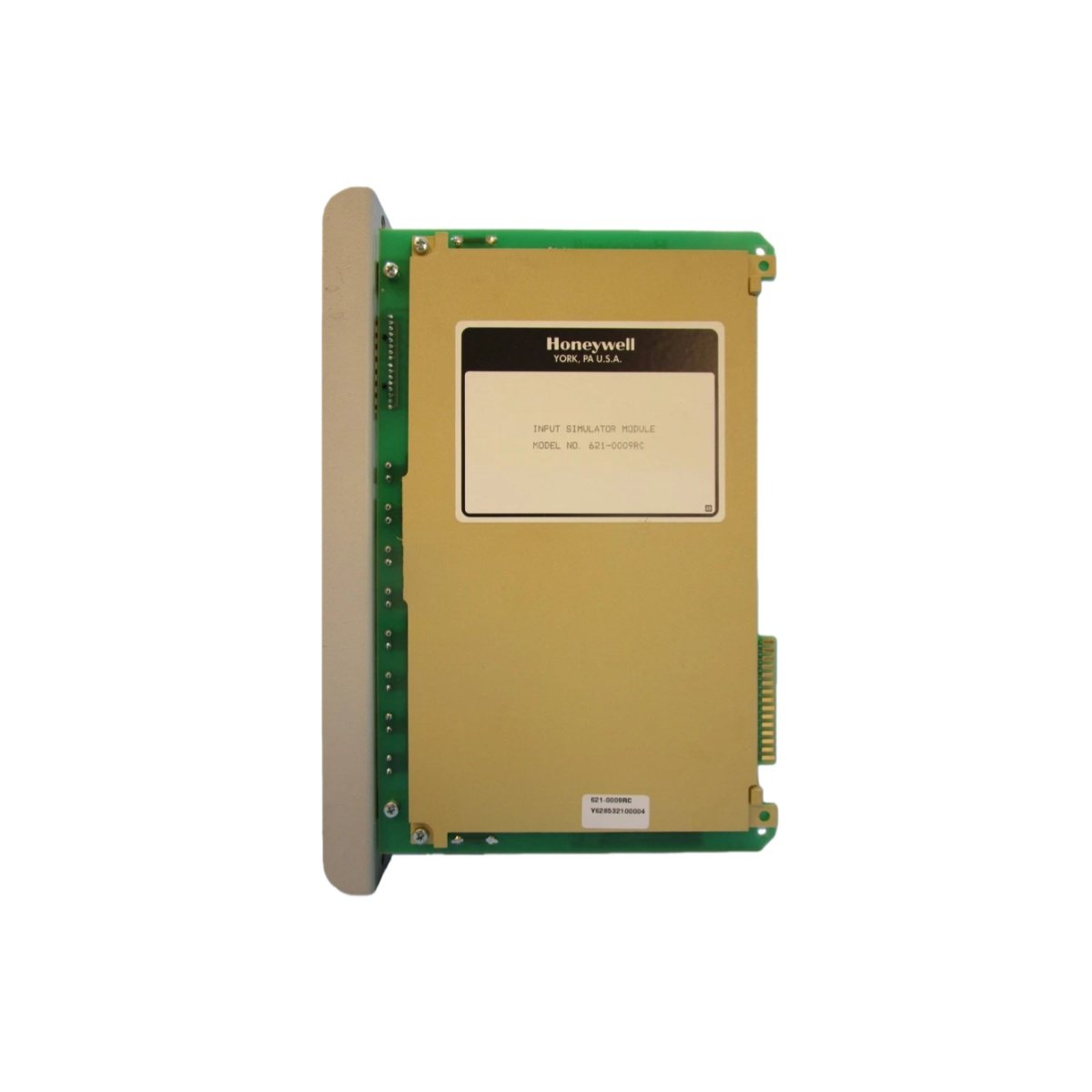
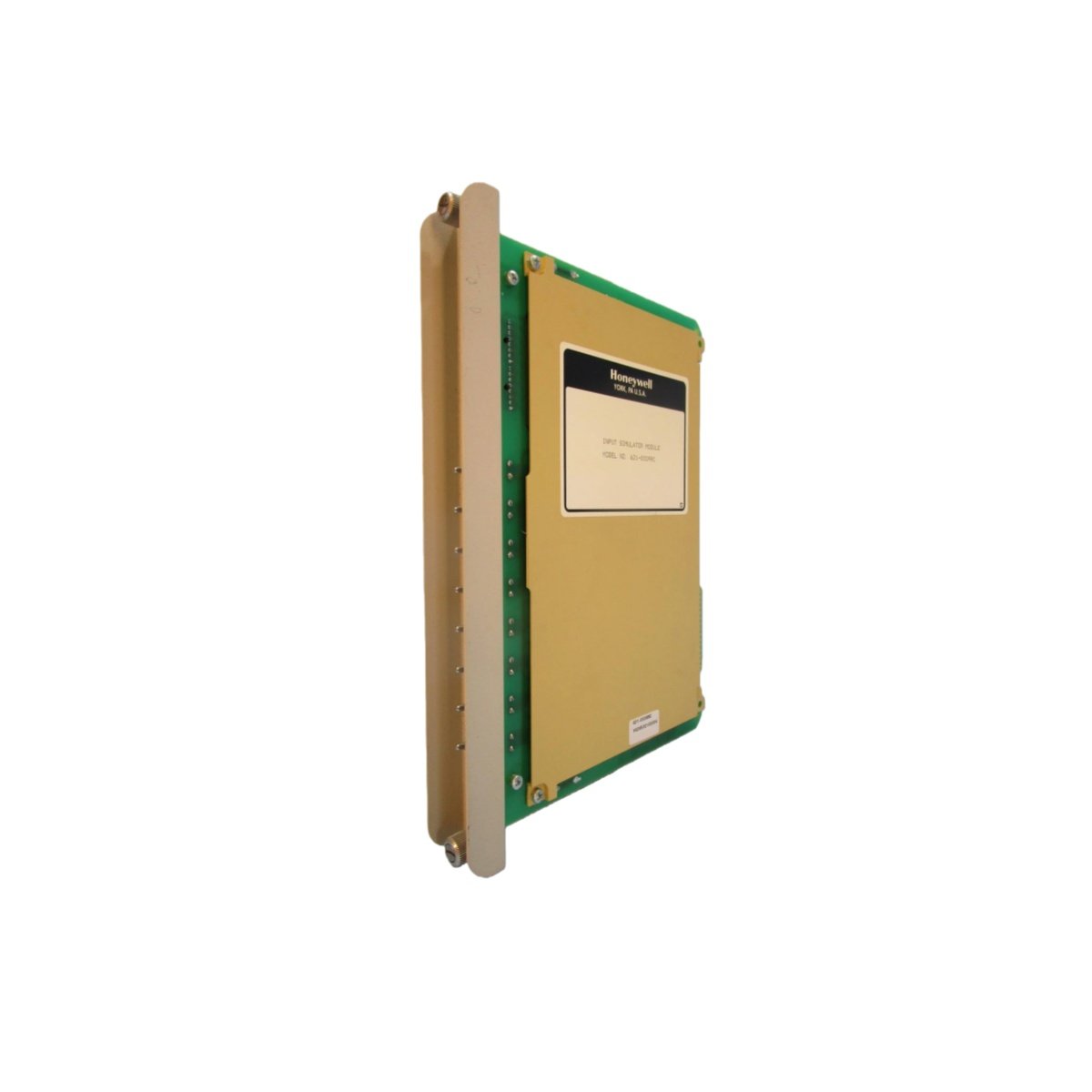
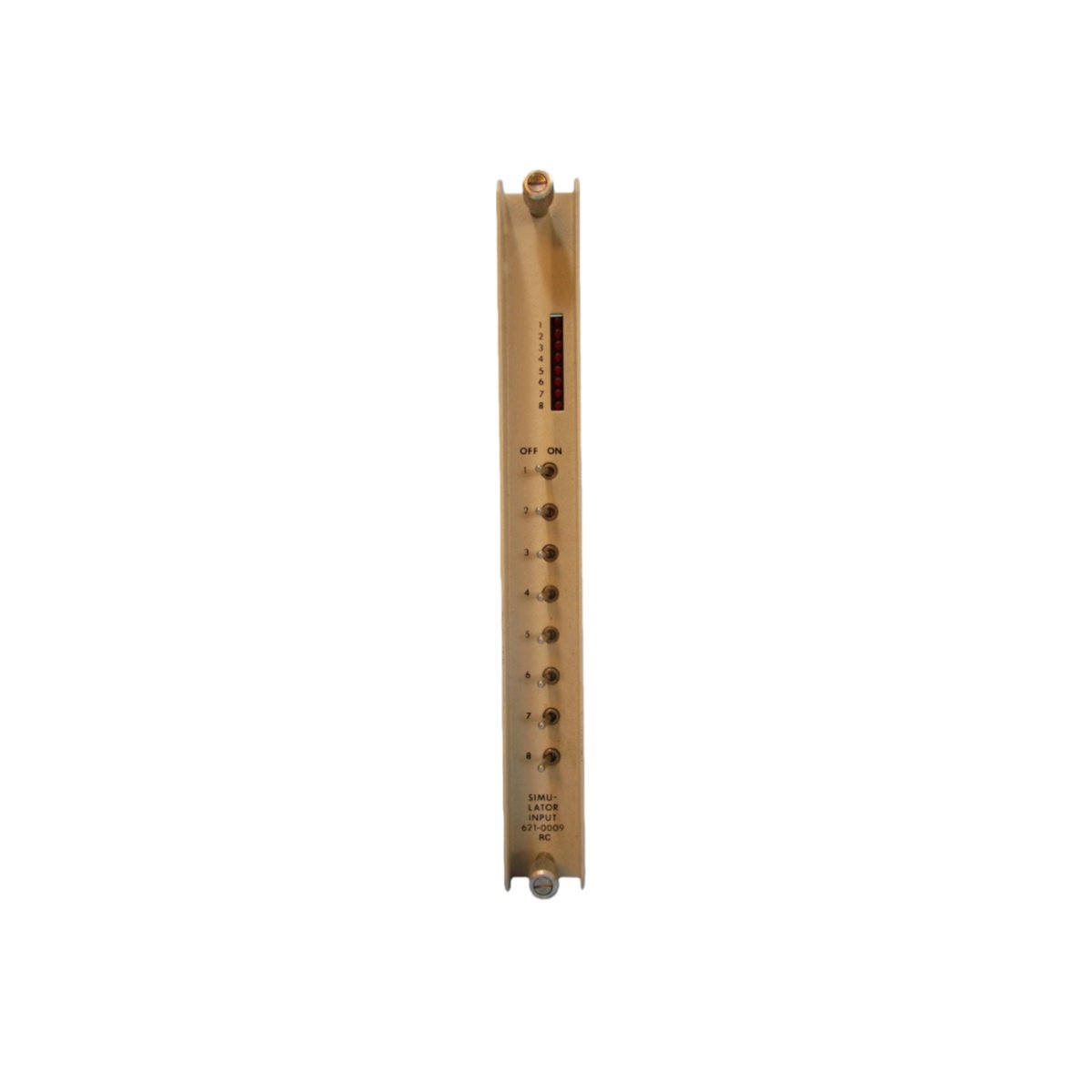
This simulator input module generates and injects test signals into Honeywell distributed control systems for validation purposes. It produces millivolt, thermocouple, and RTD outputs across a wide temperature range for accurate calibration. The module also verifies and adjusts DCS system parameters during commissioning and maintenance cycles.
Signal Generation and Simulation Capabilities
The Honeywell 621-0009 supports thermocouple types J, K, T, E, R, S, B, and N with cold junction compensation. It provides RTD simulation for Pt100 and Ni100 sensors with selectable nominal resistance values. The module offers precision millivolt generation for system calibration and testing. It interfaces directly with Honeywell’s UCN network for flexible integration into existing systems. An auto-test function performs automatic verification of critical system functions efficiently.
Technical Specifications
| Specification | Detail |
|---|---|
| Model | 621-0009 |
| Product Type | Simulator / Calibration Input Module |
| System Compatibility | Honeywell TDC 3000, TDC 2000, Experion PKS |
| Thermocouple Types | J, K, T, E, R, S, B, N |
| RTD Support | Pt100, Ni100 |
| Output Ranges | 0-100mV, 0-10V, 0-20mA, 4-20mA |
| Resolution | 0.1°C (thermocouple), 0.01Ω (RTD) |
| Accuracy | ±0.05% of reading |
| Cold Junction Compensation | Automatic or manual |
| Communication Interface | UCN bus |
| Dimensions | 165 × 280 × 51 mm |
| Weight | 0.32 kg |
| Power Supply | 5 VDC via backplane |
| Operating Temperature | 0°C to +60°C |
| Storage Temperature | -40°C to +85°C |
| Humidity | 5% to 95% non-condensing |
| Certifications | CE, UL |
Calibration Modes and User Interface
The module supports both automatic and manual calibration modes for flexible testing procedures. LED indicators display the active output signal types and status conditions clearly. Users can program the module via a keyboard display or connect it to a host computer using serial communication. The unit can store multiple test sequences in onboard memory for repeated use. It operates as a standalone simulator or integrates into the system rack for online testing.
Application Use and System Integration
Calibration engineers and maintenance technicians use this module to validate new DCS installations. The module verifies system responses to various input signals during routine performance checks. It isolates faulty channels or modules during troubleshooting activities. The device also tests alarm and interlock logic by injecting fault conditions. This module serves oil refineries, chemical plants, power stations, and other facilities requiring periodic system calibration.
Details
| Weight | 0.2 kg |
|---|---|
| Dimensions | 85 × 65 × 30 mm |
Reviews
There are no reviews yet.