

Input Architecture and Signal Acquisition
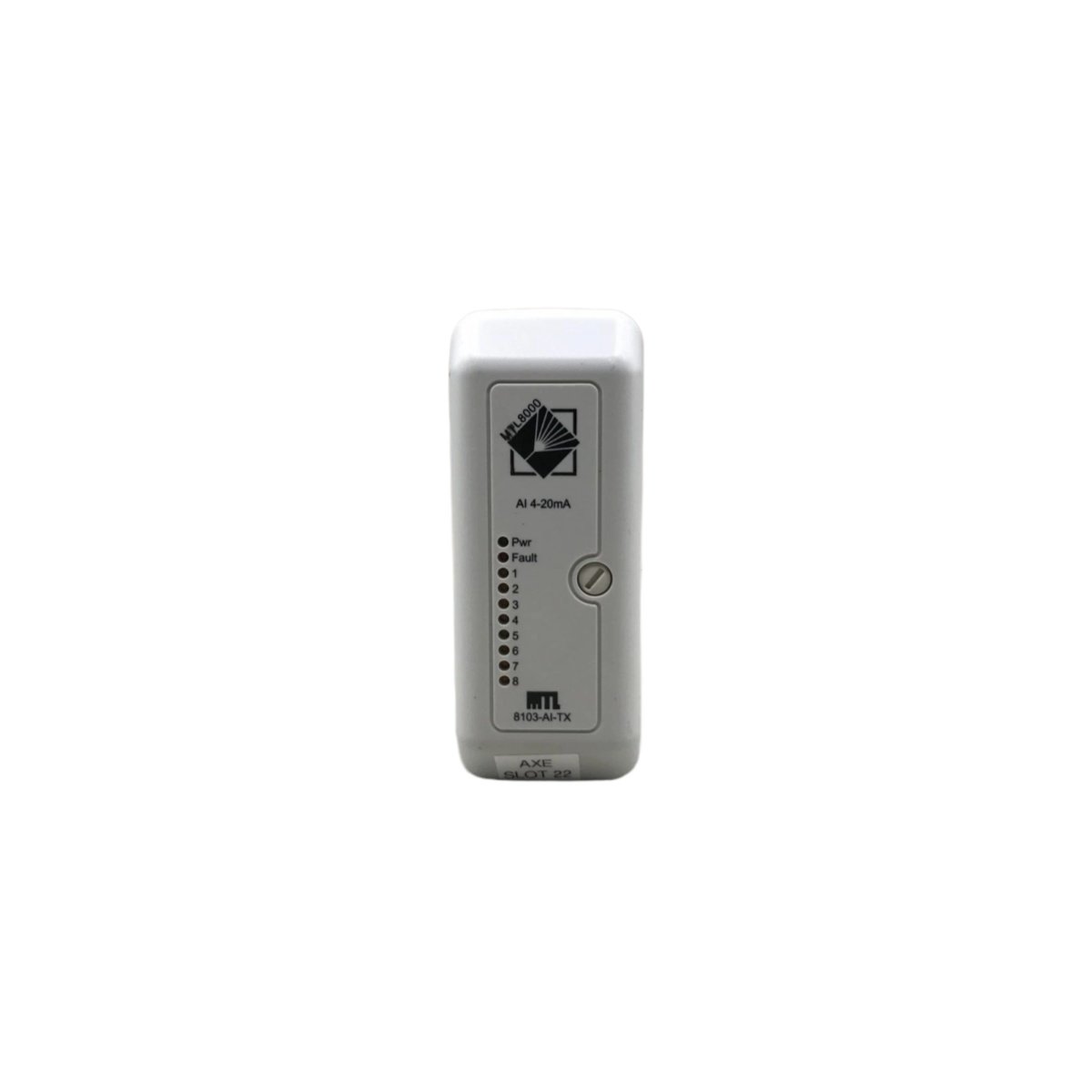
This analog input module provides precise signal measurement for up to eight differential channels. It accepts 4–20 mA current signals and 0–10 VDC voltage inputs through software configuration. The module features a 16-bit sigma-delta ADC for high-resolution signal conversion. Each channel includes programmable gain and filtering for optimized measurement. Consequently, this unit delivers accurate process data for demanding control applications.
Technical Specifications
| Parameter | Specification |
|---|---|
| Brand | GE |
| Model Number | 8103AI-TX |
| Input Channels | 8 differential analog inputs |
| Resolution | 16 bits (1 LSB = 0.002% of span) |
| Signal Types | 4–20 mA, 0–10 VDC, 0–5 VDC |
| Input Impedance (Current) | 250 Ω |
| Input Impedance (Voltage) | >1 MΩ |
| Accuracy | ±0.03% of full scale at 25°C |
| Temperature Drift | ±30 ppm/°C maximum |
| Common Mode Rejection | >100 dB at 60 Hz |
| Normal Mode Rejection | >60 dB at 60 Hz |
| Update Rate | 100 ms per channel (all channels) |
| Channel Isolation | 1500 VAC to backplane |
| Current Draw | 200 mA from 5 VDC backplane |
| Power Dissipation | 4.0 W maximum |
| Operating Temperature | –20°C to +65°C |
| Storage Temperature | –40°C to +85°C |
| Humidity | 5% to 95% non-condensing |
| Dimensions (H x W x D) | 120 mm x 30 mm x 140 mm |
| Weight | 0.35 kg |
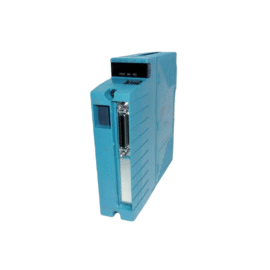
| Field Termination | 40-pin ribbon cable connector |
| Status Indicators | Channel health and module power |
Signal Conditioning and Measurement Precision
The 8103AI-TX uses a precision sigma-delta converter for low-noise analog-to-digital conversion. It performs automatic zero and gain calibration to maintain long-term accuracy. Each input channel incorporates a programmable low-pass filter for noise attenuation. The module rejects 50 Hz and 60 Hz interference effectively. This ensures stable measurement readings in electrically noisy industrial environments.
Field Wiring and Termination Interface
A 40-pin ribbon cable connects the module to field termination assemblies. Each differential input requires positive, negative, and shield connections for noise reduction. Use twisted-pair instrumentation cable for optimal common mode rejection. The module provides terminal identification labels for error-free wiring. Maintain proper cable routing away from high-voltage power conductors.
Configuration and Channel Programming
Software configuration allows individual selection of signal type for each channel. Users can set input ranging, filter time constants, and engineering units. The module stores configuration parameters in non-volatile memory permanently. This eliminates the need for configuration after power cycling. A configuration utility provides a user-friendly interface for setup.
Power Architecture and Energy Management
This module draws 200 mA from the 5 VDC backplane supply. Internal capacitors provide ride-through capability during brief power dips. Total power dissipation reaches 4.0 W under maximum input load. This efficiency reduces heat generation in the control cabinet. Ensure adequate airflow for stable thermal performance.
Installation and Mounting Instructions
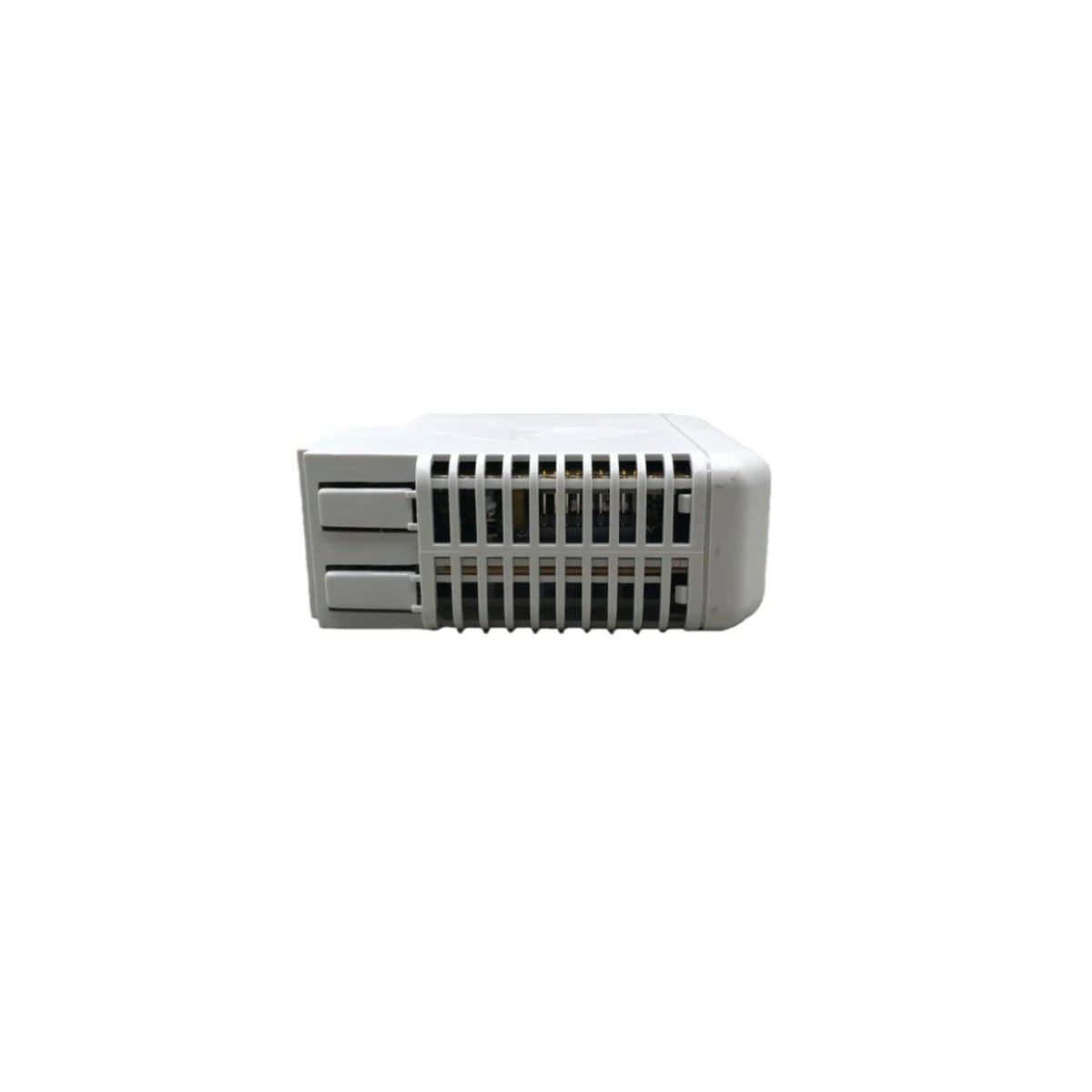
Insert the module into an available GE I/O chassis slot. Press firmly until the ejector tabs latch securely in position. Secure the module using the retaining screws on top and bottom. Connect the field wiring harness after mechanical installation completes. Verify the power LED illuminates upon system energization.
Environmental Durability and Construction Quality
This module operates reliably from –20°C to +65°C ambient temperature. It withstands humidity levels between 5% and 95% without condensation. The PCB features conformal coating for moisture and dust protection. This construction ensures long-term reliability in harsh industrial settings. The unit meets all relevant industrial standards.
Diagnostics and Maintenance Procedures
LED indicators display channel status and overall module health information. The control software provides detailed diagnostic data for troubleshooting. Replace the module if measurement accuracy exceeds specified limits. Perform periodic calibration verification using a precision source. Document calibration results for quality management requirements.
Details
| Weight | 0.35 kg |
|---|---|
| Dimensions | 120 × 30 × 140 mm |
Reviews
There are no reviews yet.