
Technical Specifications Overview
| Parameter | Specification |
|---|---|
| Manufacturer | ABB |
| Model Number | NINT-41C |
| Product Type | Communication Board |
| Compatible Systems | ABB Procontrol, AC 800, and S800 I/O families |
| Communication Interfaces | 1 x RS-232, 1 x RS-422/485 (software-selectable) |
| Supported Protocols | MODBUS RTU, ABB INN protocol, custom ASCII |
| Data Transfer Rate (RS-232) | 300 bps to 115.2 kbps |
| Data Transfer Rate (RS-422/485) | 1200 bps to 187.5 kbps |
| Maximum Cable Length (RS-485) | 1200 meters (at 38.4 kbps) |
| Number of Nodes (RS-485) | Up to 32 devices |
| Data Buffering | 512 KB FIFO (receive), 128 KB FIFO (transmit) |
| Galvanic Isolation | 1500 VAC (field side to logic side) |
| Status Indicators | 4 LEDs (Power, Run, Error, Active) |
| Front Connectors | 1 x 9-pin D-sub (RS-232), 1 x 5-pin terminal (RS-422/485) |
| Backplane Connector | 32-pin male header |
| Module Dimensions (W x H x D) | 45 mm x 130 mm x 105 mm (1.8″ x 5.1″ x 4.1″) |
| Unit Weight | Approximately 0.20 kg (0.44 lbs) |
| Power Consumption | 80 mA at 24 VDC |
| Internal Energy Storage | 100 µF bulk capacitor |
| Termination Resistors | Software-selectable (RS-485) |
| Configuration Method | DIP switches and software parameters |
| Firmware Update | Via backplane or serial port |
| Standards Compliance | CE, UL, CSA, IEC 61131-2, EIA/TIA-485 |
Functional Overview and Serial Connectivity
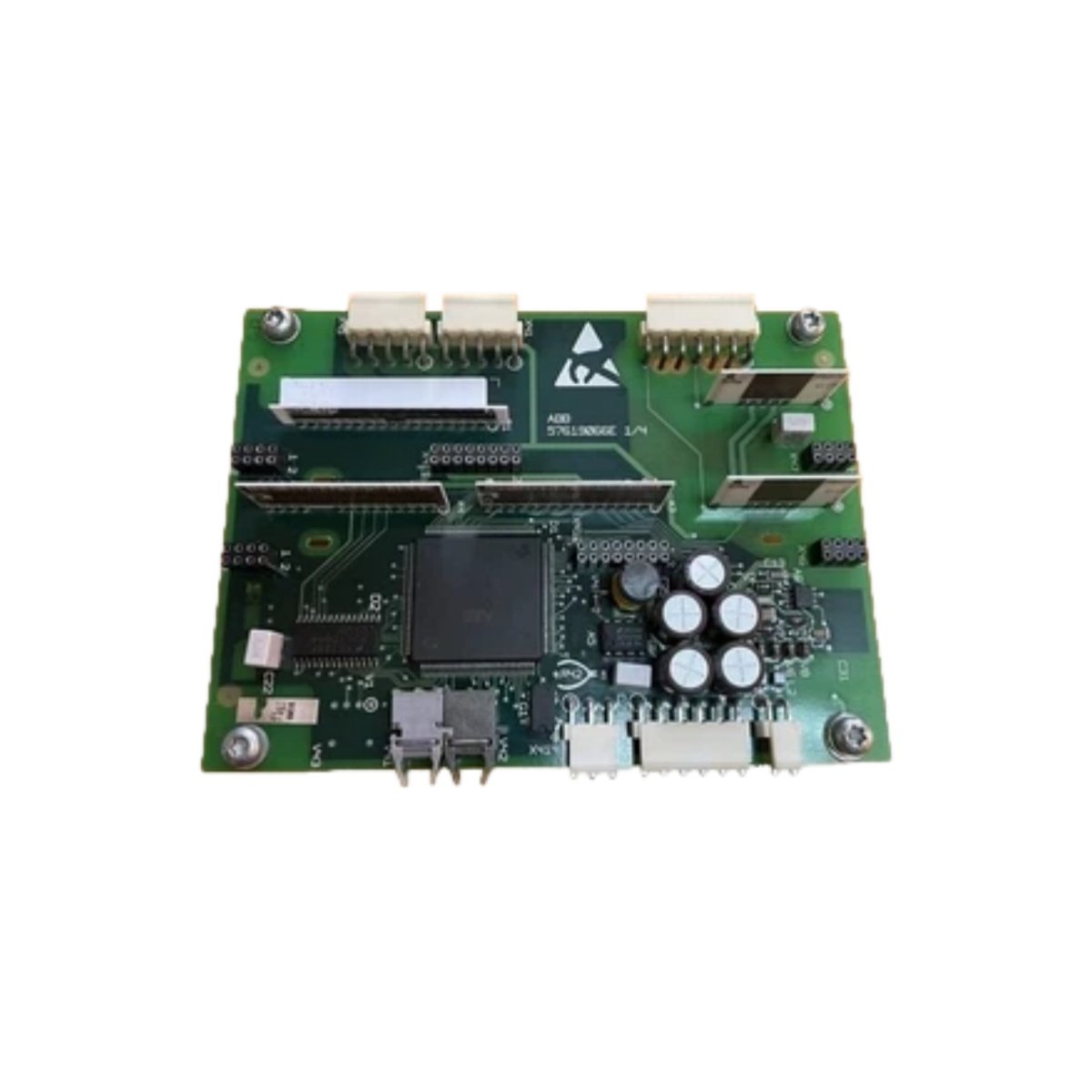
This communication board provides flexible serial connectivity for ABB control systems. It interfaces with field devices using RS-232, RS-422, or RS-485 standards. The NINT-41C supports protocol conversion for seamless data exchange with third-party devices. Moreover, the module operates as an independent communication processor. This offloads protocol handling from the main CPU for improved performance. The board also includes substantial buffering for reliable message handling. Consequently, it handles communication tasks without interrupting critical control loops.
Interface Selection and Physical Layer Support
The ABB NINT-41C offers dual-port connectivity with software-selectable options. The first port supports RS-232 for point-to-point connections with HMIs and programming terminals. The second port supports RS-422 for long-distance balanced transmission. It also supports RS-485 for multi-drop networks with up to 32 devices. You can configure the port for either standard through software switches. This flexibility matches various field device requirements. The board also includes software-selectable termination resistors for the RS-485 port. This feature simplifies network setup without physical jumper changes.
Communication Protocols and Data Handling
The module supports MODBUS RTU for connectivity with sensors, drives, and instrumentation. It also supports the ABB INN protocol for native system integration. Additionally, the board supports custom ASCII protocols for specialized applications. The large 512 KB receive buffer prevents data loss during high-speed communication. The 128 KB transmit buffer ensures smooth outgoing message delivery. The NINT-41C automatically handles CRC checking and error detection. This automatic checking ensures reliable data transfer without burdening the CPU.
Physical Architecture and Installation Details
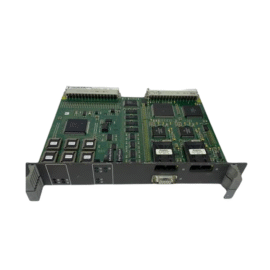
The module measures 45 mm x 130 mm x 105 mm (1.8″ x 5.1″ x 4.1″) and weighs approximately 0.20 kg. Its compact format fits standard ABB rack configurations. The front panel provides a 9-pin D-sub connector for the RS-232 port. A 5-pin terminal block serves the RS-422/485 port. The backplane connector handles power and data exchange with the controller. The module mounts on a standard DIN rail with an integrated latch. The depth of 105 mm provides adequate space for cable clearance.
Status Indication and Diagnostic Features
The board features four front-panel LEDs for clear status monitoring. A green Power LED confirms correct supply voltage. A Run LED indicates normal processor operation. An Error LED alerts users to configuration or communication faults. An Active LED shows data transmission on the selected port. The board also logs communication errors and parity violations internally. Through the system software, you can access detailed diagnostic counters. This visibility simplifies troubleshooting of network issues.
Power Supply and Energy Storage Features
The module draws only 80 mA from a 24 VDC external power supply. This minimal consumption suits low-power applications. The internal 100 µF capacitor provides short-term energy storage. This capacitance maintains operation during brief power interruptions. The module also includes input filtering for supply noise. The board offers reverse-polarity protection on the power terminals.
Configuration and System Integration
DIP switches on the module enable basic communication parameter settings. You can set the baud rate, data format, and address through these switches. Advanced protocol parameters require configuration through ABB software tools. The board also supports automatic baud rate detection for MODBUS RTU. This feature simplifies connection with unknown devices. The module retains all configuration settings in non-volatile memory.
Environmental Conditions and Certifications
The module operates reliably from 0°C to +60°C ambient temperature. Storage temperatures range from -40°C to +85°C. The unit carries CE, UL, and CSA certifications. Install the module in a clean, dry control cabinet. The board also complies with EIA/TIA-485 standards for balanced transmissio
Details
| Weight | 0.20 kg |
|---|---|
| Dimensions | 45 × 130 × 105 mm |
Reviews
There are no reviews yet.