
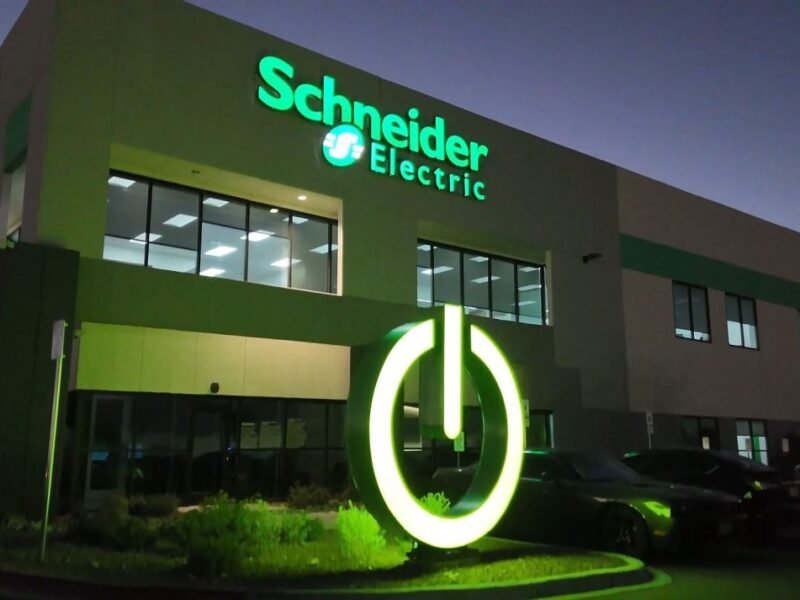
CEO Vision for Industrial Automation and Sustainability
After assuming the role of CEO, Olivier Blum presented Schneider Electric’s strategic vision at the Copenhagen Innovation Summit. He emphasized the convergence of electrification, automation, and digital intelligence to accelerate sustainability. Blum highlighted energy as the cornerstone of innovation and stated that Schneider Electric aims to be the trusted energy technology partner for every industry, business, and home.
Driving the Energy Transition with Intelligent Infrastructure
Blum addressed the rapid rise in global power demand, projected to increase by 60 percent over the next 15 years. Moreover, renewable energy sources like solar and wind are expected to triple in market share by 2030. Schneider Electric responds by embedding intelligence into infrastructure via platforms such as EcoStruxure, enabling real-time control, predictive maintenance, and operational optimization across industrial and utility sectors.
Strategy for Grid Resilience and Digitalization
Schneider Electric prioritizes grid resilience by combining digitalization, intelligent software, and microgrids. Strategic partnerships enhance this approach, helping grids withstand extreme weather and accommodate renewable energy growth. The One Digital Grid Platform provides utilities with a modular, AI-powered ecosystem for complete lifecycle management, from planning to customer engagement.
Components of the One Digital Grid Platform
- Grid Planning & Asset Management: Integrates advanced modeling, data validation, and asset optimization tools to reduce operational and capital costs while maintaining grid reliability.
- Grid Operations & Resiliency: Leverages real-time data and predictive analytics, including AI solutions like AiDASH, to enhance disaster response and operational efficiency during extreme weather.
- Grid Flexibility & Customer Engagement: Supports distributed energy resources (DERs) and improves customer experiences through interoperable solutions with prosumer engagement platforms.
AI-Driven Infrastructure and Liquid Cooling Solutions
Schneider Electric expanded its presence in high-performance computing with a controlling stake in Motivair, focusing on liquid cooling solutions. Thermal Design Power (TDP) has surged from 700W to 2700W within two years due to AI workloads on GPUs like NVIDIA’s GB200. Schneider’s end-to-end solutions, including ChilledDoor heat exchangers, dynamic cold plates, and coolant distribution units, now support supercomputers, highlighting the company’s leadership in AI infrastructure cooling.
Open, Hardware-Independent Automation Vision
Schneider Electric promotes Virtualization and Open Software-Defined Automation (OSDA) to empower manufacturers with hardware-independent flexibility. Its EcoStruxure Automation Expert platform enables control applications to operate in virtualized environments, from industrial PCs on the shop floor to centralized servers. This open approach ensures interoperability across vendors and platforms, eliminating dependency on proprietary hardware.
Key Elements of OSDA
- EcoStruxure Automation Expert: Supports universal automation and application-centric design independent of physical controllers.
- Industrial Copilot: Uses AI to streamline PLC code generation and machine integration.
- Digital Continuity Tools: Connect IT and OT systems for real-time data sharing and predictive analytics.
- Cybersecurity and Resilience: Built-in protections secure software-defined control in industrial operations.
Industry Insight and Expert Commentary
Schneider Electric’s strategy demonstrates a clear trend toward intelligent, open, and software-driven automation. By embracing virtualization and AI-assisted operations, industrial facilities can achieve higher flexibility, improved resilience, and reduced operational costs. Manufacturers should evaluate hardware-independent automation solutions to remain competitive in the evolving industrial automation landscape.
Application Scenarios
- Smart factories deploying virtual PLCs for flexible production lines
- Utilities leveraging AI-driven grid management and resiliency analytics
- Data centers and HPC environments requiring advanced liquid cooling solutions
- Industrial facilities adopting EcoStruxure Automation Expert for vendor-neutral control