
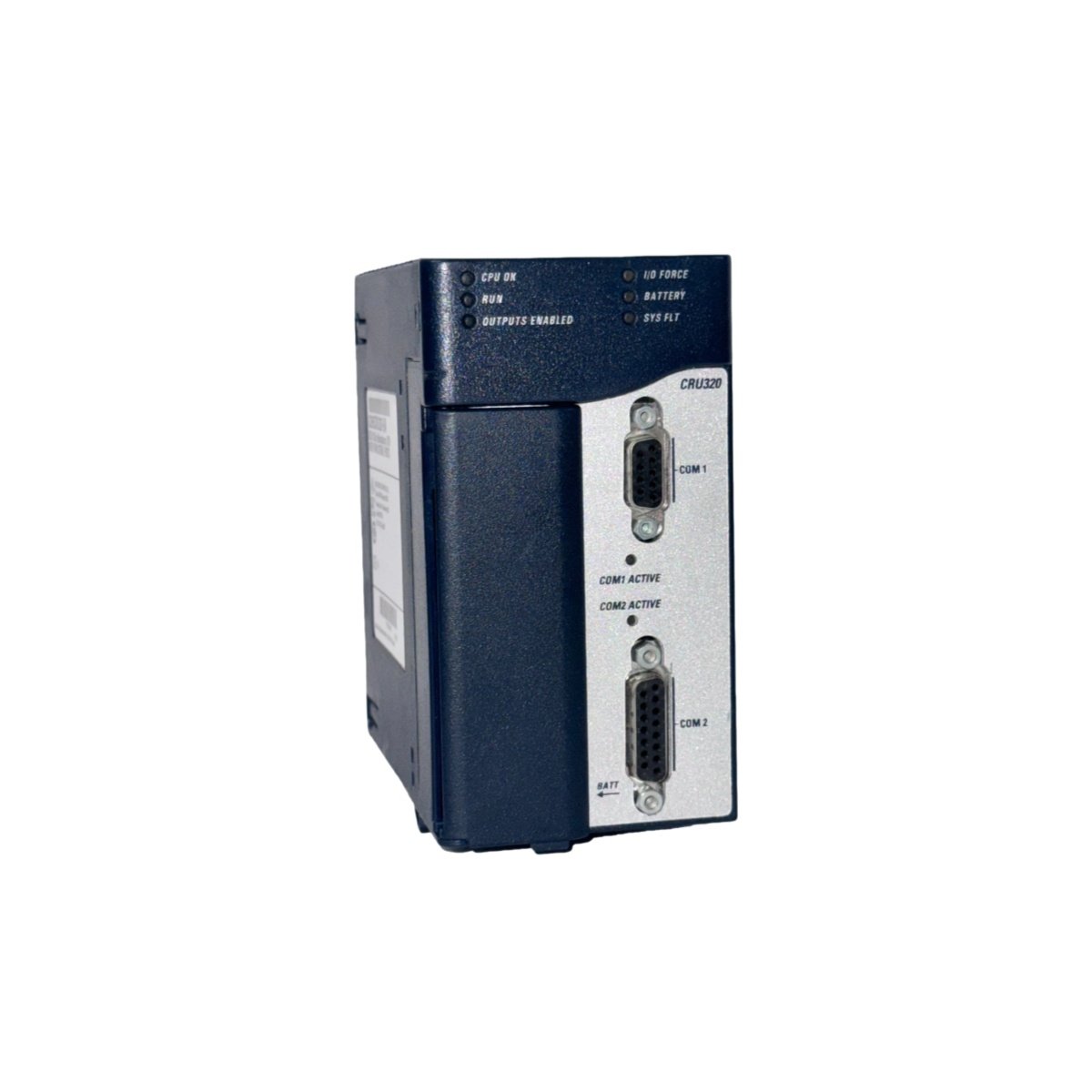
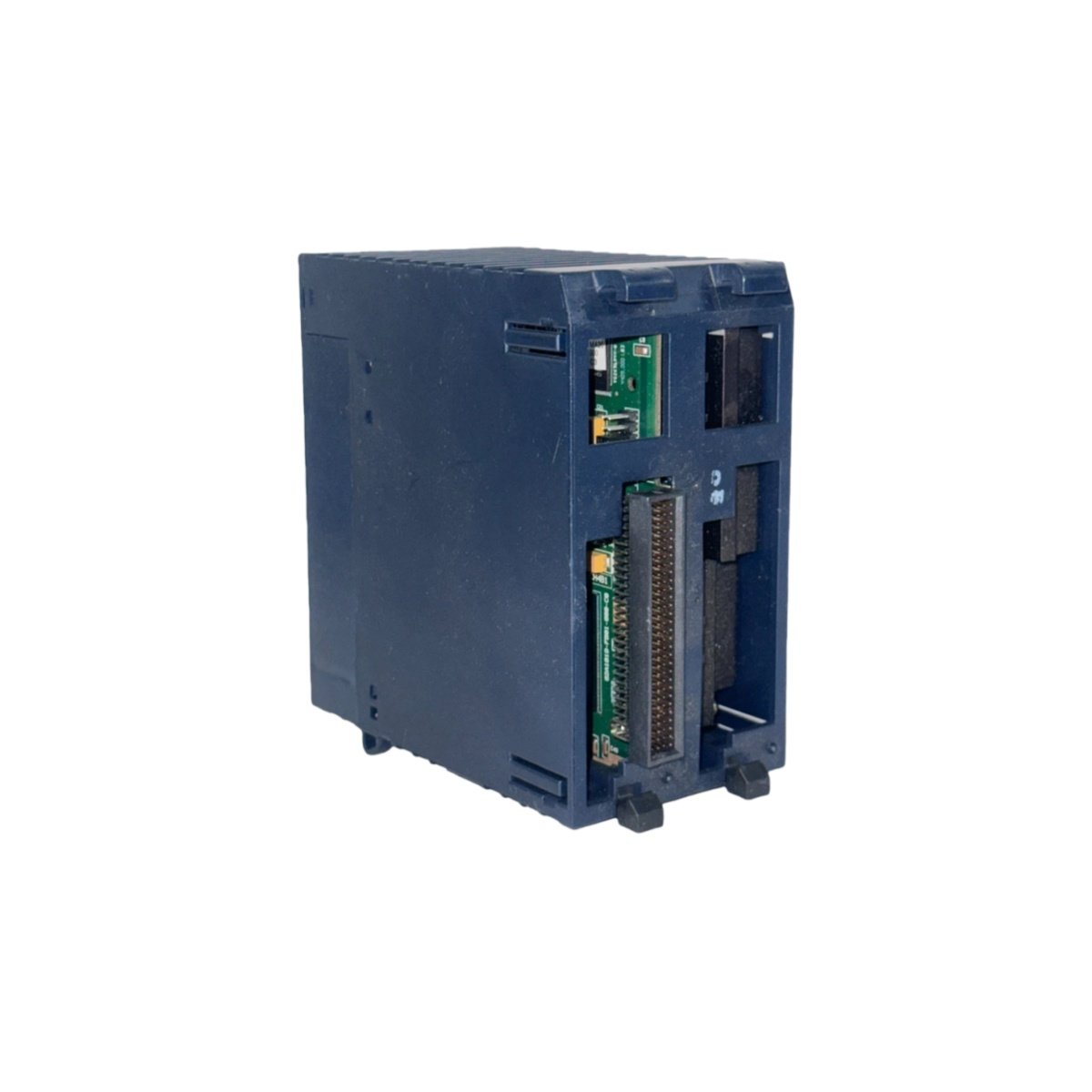
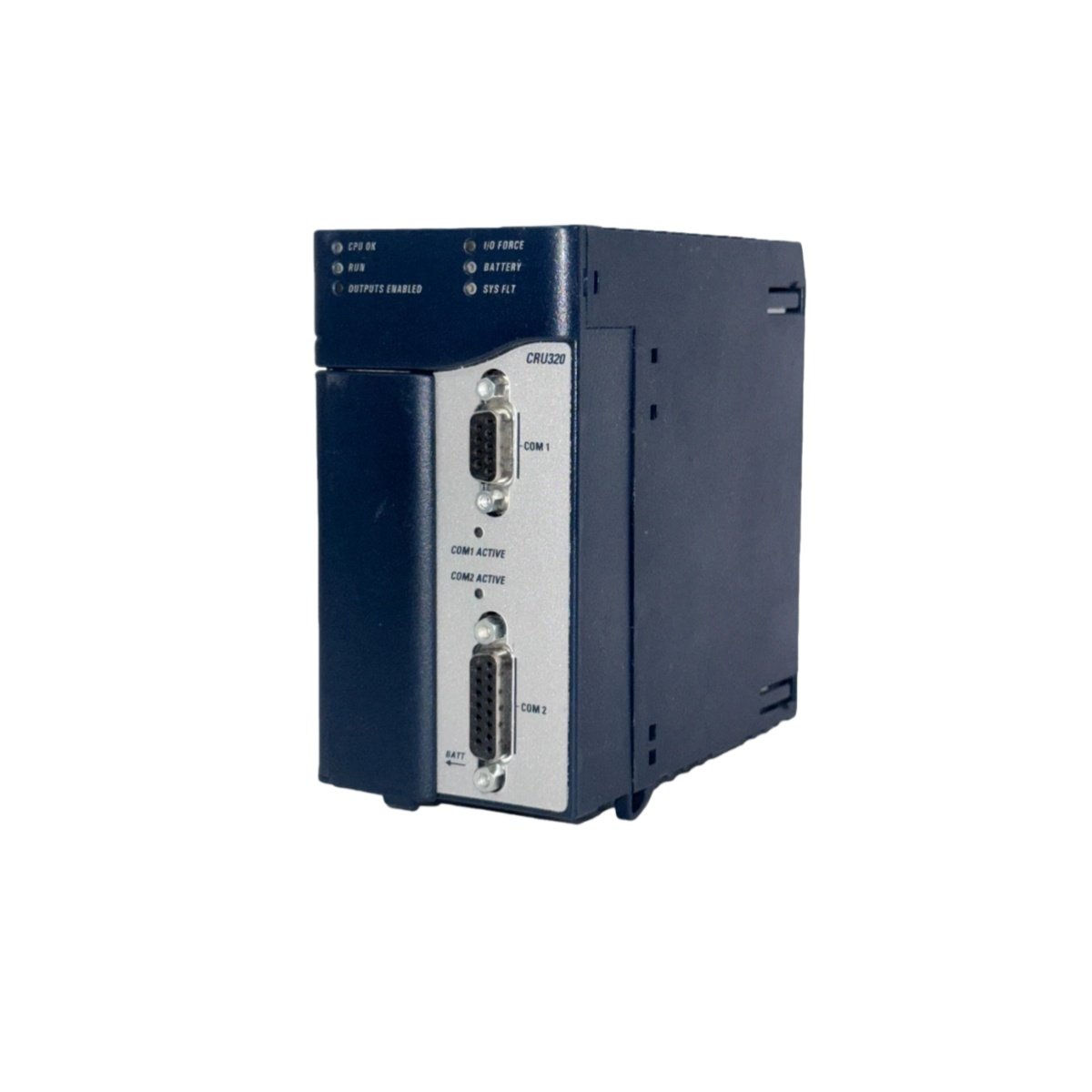
The GE IC695CRU320 serves as the central processing unit for RX3i PacSystems controllers requiring redundant operation. This module provides seamless switchover capabilities for critical applications demanding maximum uptime. It consequently maintains continuous control even if the primary processor experiences a fault condition.
Physical Characteristics and Build Quality
Engineers designed this redundant CPU for installation in RX3i Universal Backplanes with standard module dimensions. The unit measures approximately 20 centimeters in height, 10 centimeters in width, and 12 centimeters in depth. Its total weight reaches roughly 1.1 kilograms, including the integrated heat sink and shielding components. The rugged metal enclosure ensures reliable operation in industrial environments with electrical noise.
Technical Specifications
| Parameter | Specification |
|---|---|
| Dimensions | 20 cm (H) x 10 cm (W) x 12 cm (D) |
| Weight | 1.1 kg approximately |
| Enclosure | Metal with EMI/RFI shielding |
| Processor Type | 1.1 GHz Celeron M |
| Memory | 64 MB user memory, expandable to 128 MB |
| Flash Memory | 32 MB for firmware and data storage |
| Redundancy Mode | Hot-standby with automatic failover |
| Switchover Time | < 50 ms typical |
| Backplane Current | 1.5 A at 5 VDC, 0.2 A at 3.3 VDC |
| Power Consumption | 12 watts maximum |
| Communication Ports | 2 Ethernet (10/100/1000), 1 RS-232, 1 RS-485 |
| Ethernet Protocols | SRTP, Modbus TCP, EGD |
| Serial Protocols | Modbus RTU, SNP |
| Battery Backup | Lithium for RAM retention, 5-year life |
| Energy Storage | 470 µF capacitors for hold-up during transfer |
| Operating Temperature | 0°C to +60°C |
| Humidity | 5% to 95% non-condensing |
| Vibration Resistance | 2 g at 10-150 Hz |
| Shock Resistance | 15 g operational |
Redundant Operation Principles
The IC695CRU320 operates in pairs with a second identical CPU for true redundancy. Both processors execute the same application program simultaneously and exchange health status messages. The secondary unit maintains synchronized data tables with the primary through dedicated backplane communication. Consequently, the system can transfer control instantly upon detecting any primary CPU failure.
Memory and Data Synchronization
Built-in memory management ensures complete data consistency between redundant processors. The CPU uses a high-speed synchronization link to update the standby unit every program scan. This process maintains identical register values, timer counts, and I/O states at all times. The 64 MB user memory provides ample space for complex control applications.
Communication Capabilities
Dual Gigabit Ethernet ports enable high-speed communication with HMIs, SCADA systems, and other controllers. The IC695CRU320 supports multiple protocols simultaneously for maximum connectivity flexibility. Serial ports accommodate legacy device connections through Modbus RTU or SNP protocols. Redundant communication paths ensure continuous data exchange even if one network fails.
Failover Performance
Engineers optimized this CPU for extremely fast switchover times under 50 milliseconds. This rapid response ensures that controlled processes experience no disruption during failover events. The standby CPU assumes control at exactly the same program state as the failed primary. Therefore, applications like turbine control or continuous processes remain completely unaffected.
System Configuration Requirements
Proper redundant operation requires both CPUs to have identical firmware revisions and application programs. You must install the modules in adjacent slots within the same RX3i backplane. A dedicated redundancy cable connects the two processors for high-speed synchronization. The GE IC695CRU320 also requires specific rack configurations for optimal performance.
Diagnostic and Status Indication
Front-panel LEDs provide immediate visual feedback on CPU and redundancy status. Green indicators show proper operation of both the primary and standby units. Red LEDs illuminate to indicate faults or loss of synchronization between processors. These diagnostics enable operators to quickly identify and address any redundancy issues.
Battery-Backed Memory
An onboard lithium battery maintains program and data memory during power-down conditions. This battery provides up to five years of data retention at normal operating temperatures. The CPU monitors battery voltage and alerts users well before the end of service life. You can replace the battery without removing the module from the backplane.
Details
| Weight | 0.1 kg |
|---|---|
| Dimensions | 25 × 108 × 127 mm |
Reviews
There are no reviews yet.