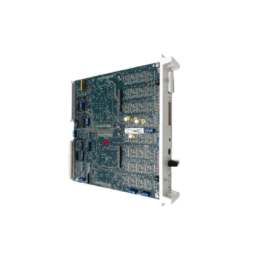
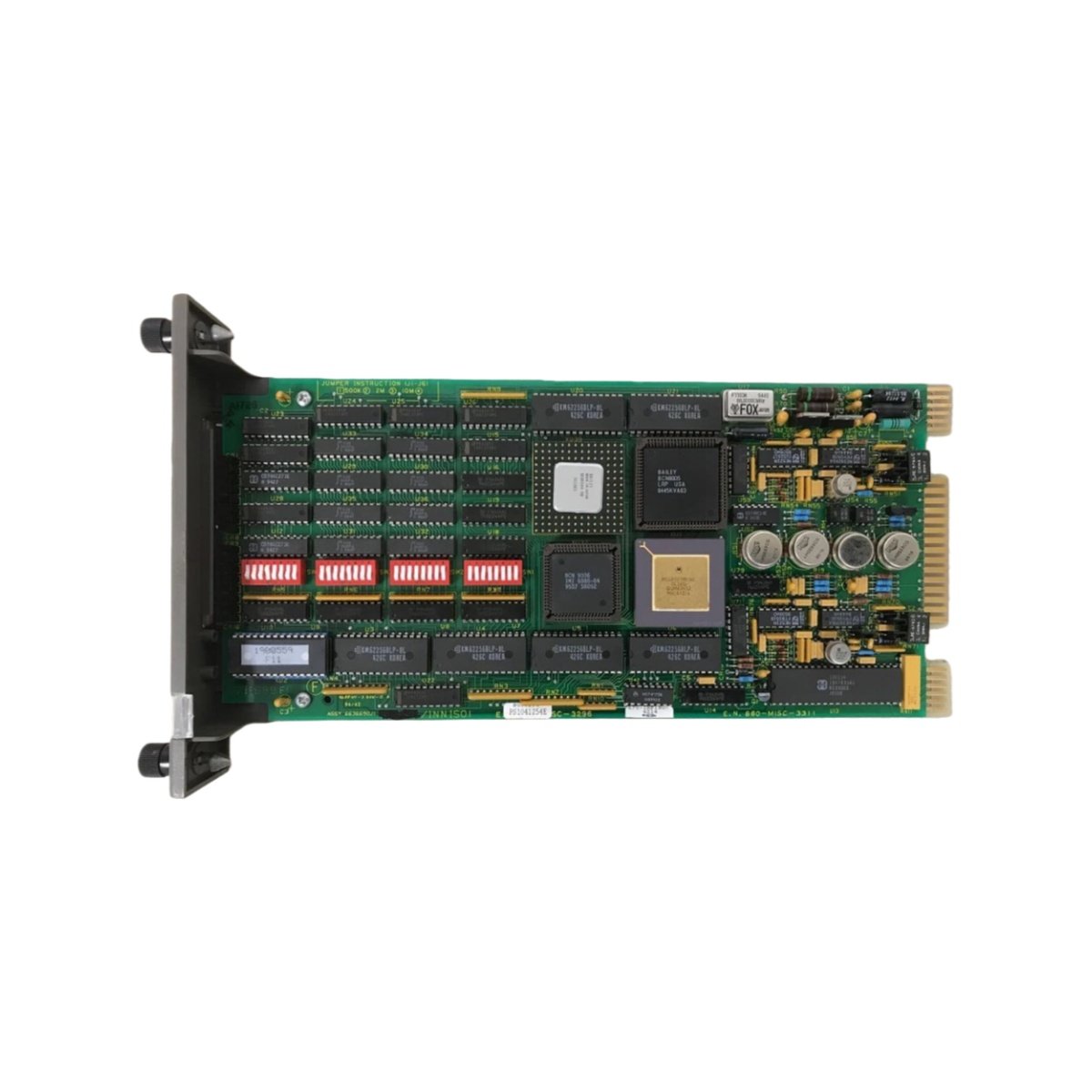
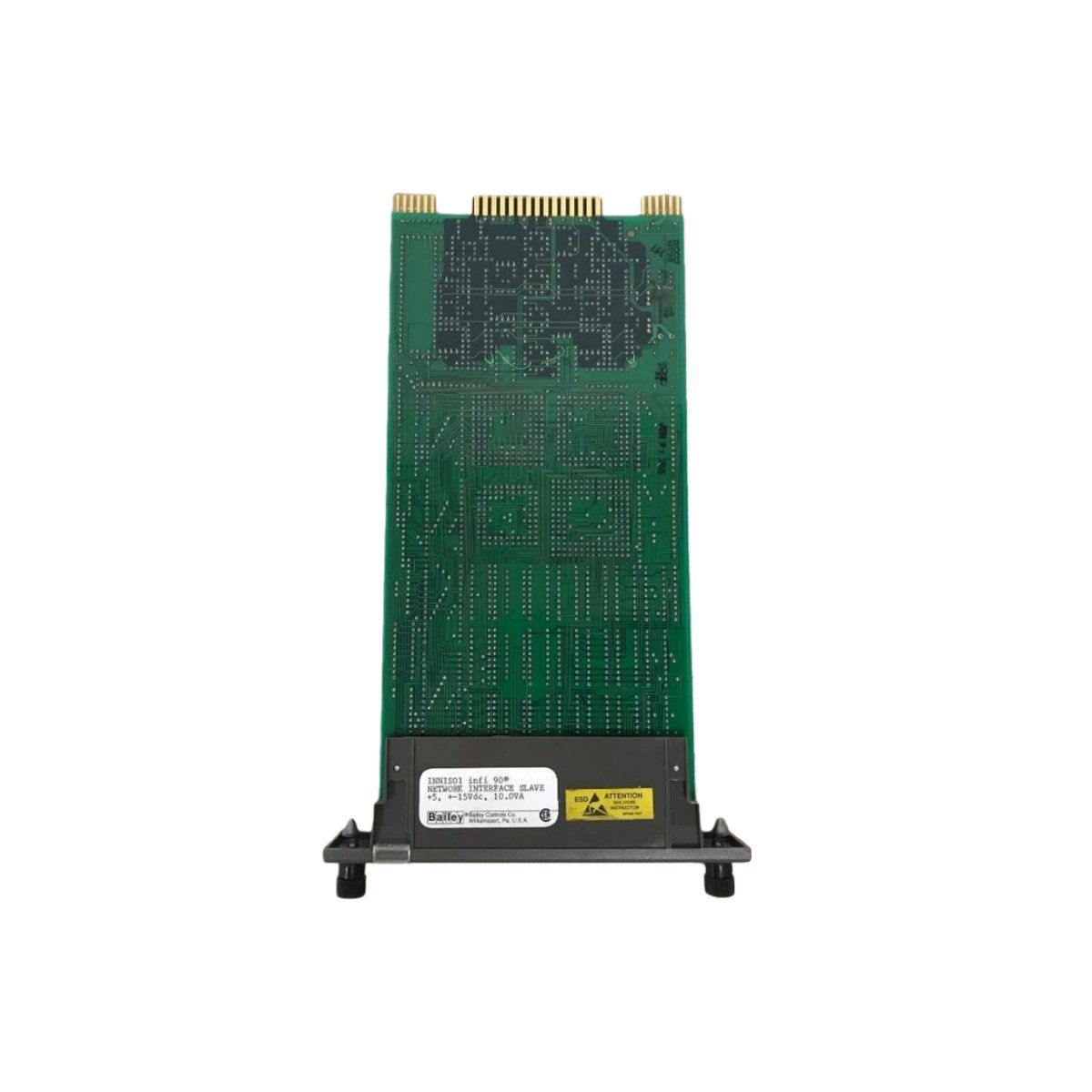
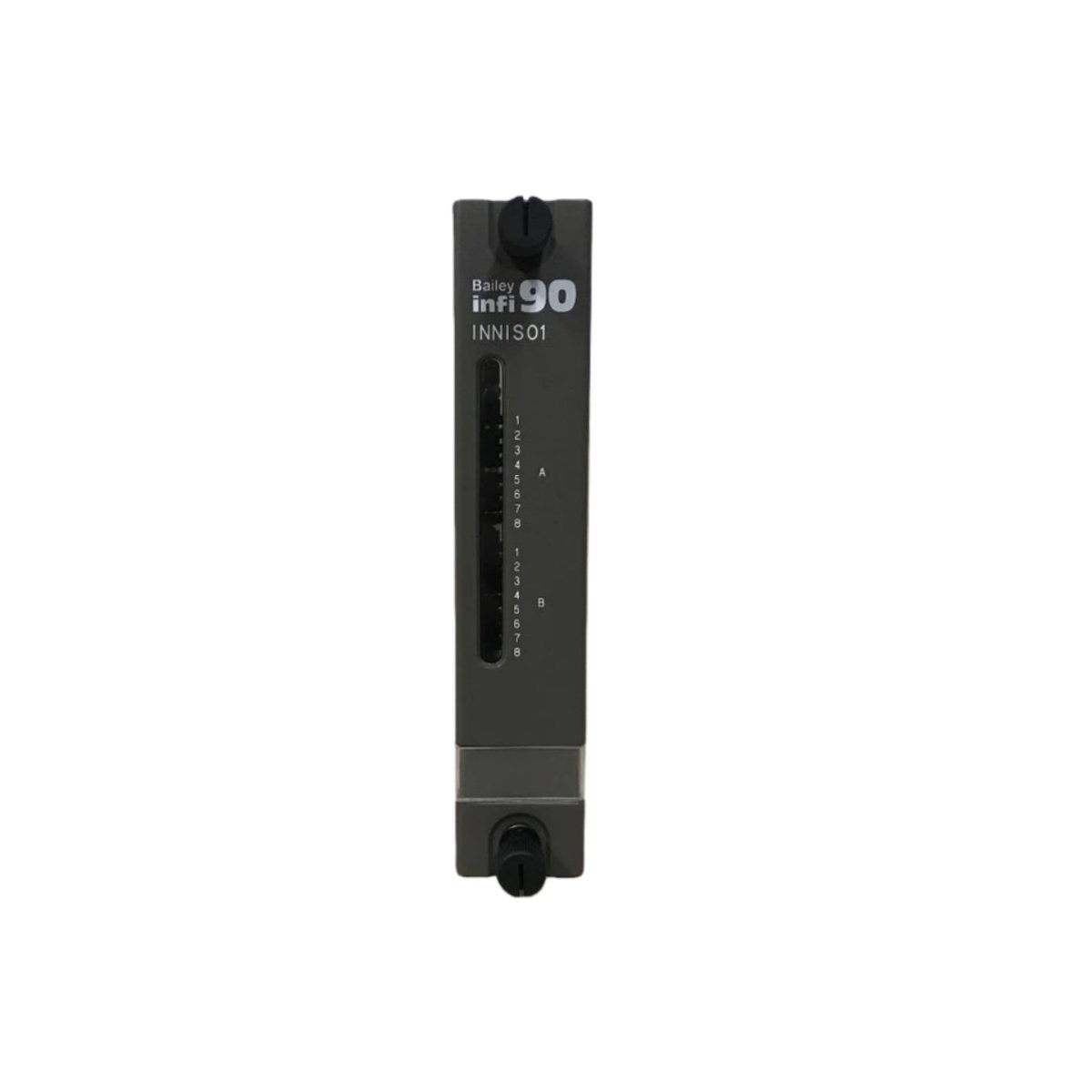
This network interface slave module connects field devices to ABB distributed control systems efficiently. The ABB INNIS01 serves as a dedicated communication processor for remote I/O and intelligent instruments. It handles data acquisition and command distribution across the Infi-Net fieldbus network. System integrators choose this module for its robust performance and easy configuration. Its slave architecture offloads communication tasks from the main system processor.
Technical Specifications Summary
| Parameter | Specification |
|---|---|
| Network Protocol | ABB Infi-Net slave protocol |
| Transmission Speed | 2 Mbps over shielded twisted-pair cable |
| Maximum Cable Length | 500 meters per segment |
| Network Nodes per Master | Up to 32 slave modules |
| Data Exchange Capacity | 240 bytes input, 240 bytes output per scan |
| Digital I/O Points | 128 digital inputs, 128 digital outputs |
| Analog I/O Points | 32 analog inputs, 32 analog outputs |
| Scan Rate | 10 ms for digital data, 50 ms for analog data |
| Communication Interface | 1x Infi-Net port, 2x RJ-45 connectors (IN/OUT) |
| Diagnostic Interface | RS-232-C serial port for local access |
| Dimensions (H x W x D) | 45 mm x 335 mm x 235 mm |
| Weight | 1.5 kg |
| Power Consumption | 15 W from +5 V DC backplane |
| Operating Temperature | 0 °C to +55 °C |
| Storage Temperature | -25 °C to +70 °C |
| Relative Humidity | 5% to 95% non-condensing |
Slave Network Architecture and Communication
The module implements the Infi-Net slave protocol for deterministic data exchange. It responds to polling requests from a master controller or gateway module. The communication link operates at 2 Mbps for fast and reliable data transfer. Maximum cable length reaches 500 meters per segment without repeaters. Up to 32 slave modules can connect to a single network master. The ABB INNIS01 automatically handles network addressing and collision avoidance. It synchronizes its data exchange with the master’s scan cycle seamlessly. This architecture ensures predictable performance for time-critical control applications.
I/O Data Exchange and Scan Performance
For field device interfacing, the module supports extensive I/O data capacity. It handles up to 240 bytes of input data and 240 bytes of output data. This capacity translates to 128 digital inputs and 128 digital outputs typically. Additionally, it accommodates 32 analog inputs and 32 analog outputs as needed. Digital data updates every 10 milliseconds for fast discrete control response. Analog values refresh every 50 milliseconds for stable process monitoring. The ABB INNIS01 maps these data points to memory addresses accessible by the master. Users configure this mapping through the module’s setup interface for each application.
Physical Interfaces and Connectivity
The module provides straightforward physical connections for network integration. One Infi-Net port uses two RJ-45 connectors for daisy-chaining multiple slaves. This IN/OUT arrangement simplifies wiring and reduces cable runs. A dedicated RS-232-C serial port serves as a diagnostic and configuration interface. Engineers connect a laptop to this port for parameter setup and troubleshooting. The module also includes LED indicators for network status and communication activity. These indicators help technicians verify proper operation without special tools. All network ports include transformer isolation for electrical noise protection.
Mechanical Design and Installation
This slave module occupies one standard slot in the ABB chassis system. The unit measures 45 millimeters in height, 335 millimeters in width, and 235 millimeters in depth. Total weight reaches 1.5 kilograms with its rugged metal housing. Power consumption averages 15 watts from the +5 V DC backplane supply. The module’s low power draw reduces cooling requirements within the control cabinet. Installation involves inserting the module into the rack and connecting network cables. No external power supply connections are necessary for normal operation.
Environmental Endurance and System Reliability
Control rooms require stable equipment performance under varying environmental conditions. The ABB INNIS01 operates reliably within a 0 °C to 55 °C temperature range. Storage temperatures from -25 °C to 70 °C protect the unit during logistics. Humidity tolerance spans 5% to 95% without condensation affecting electronics. The module includes transient suppression on all communication lines. This protection guards against voltage spikes from field wiring. Conformal coating on circuit boards prevents moisture-related failures. These features deliver consistent service and minimize unexpected downtime.
Details
| Weight | 1.5 kg |
|---|---|
| Dimensions | 45 × 335 × 235 mm |