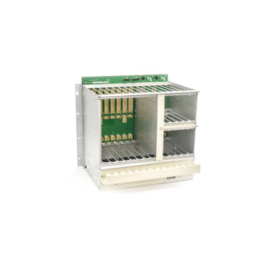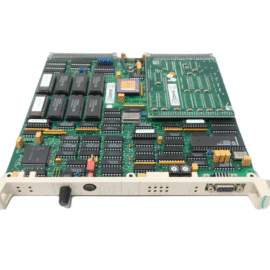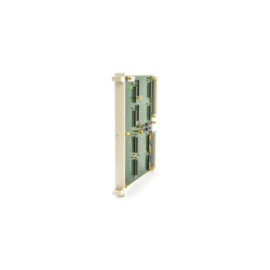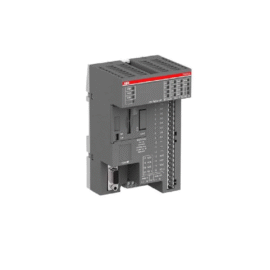
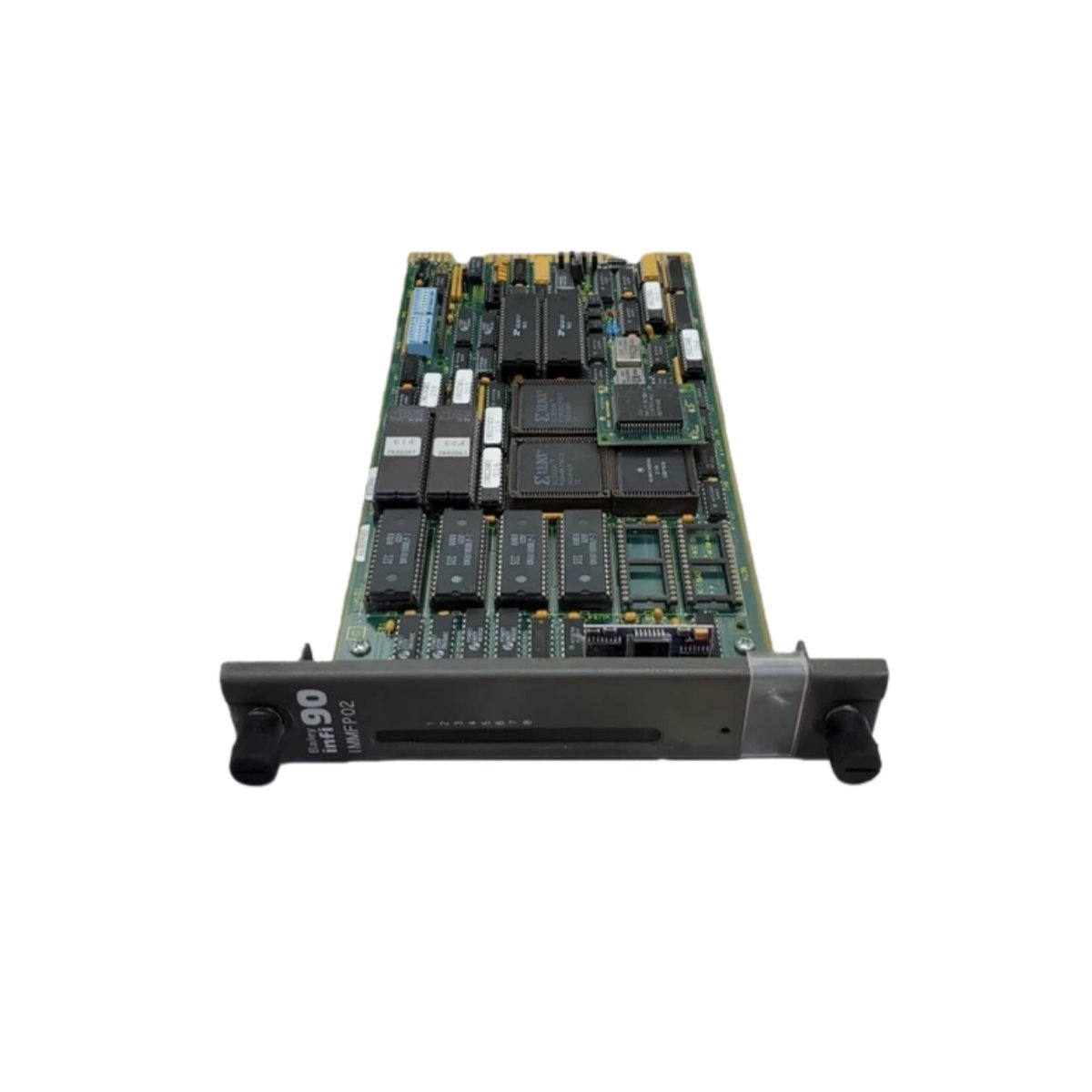
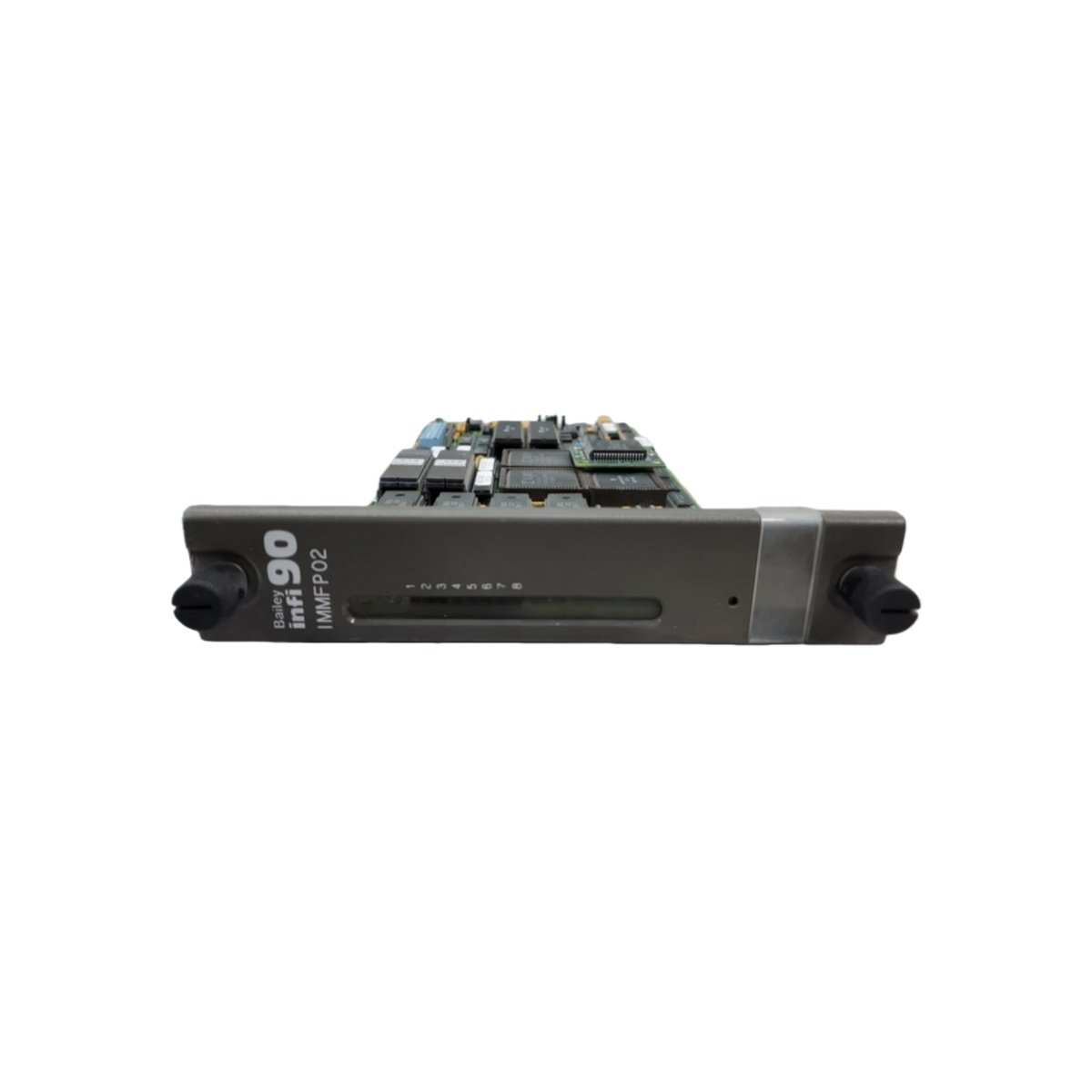
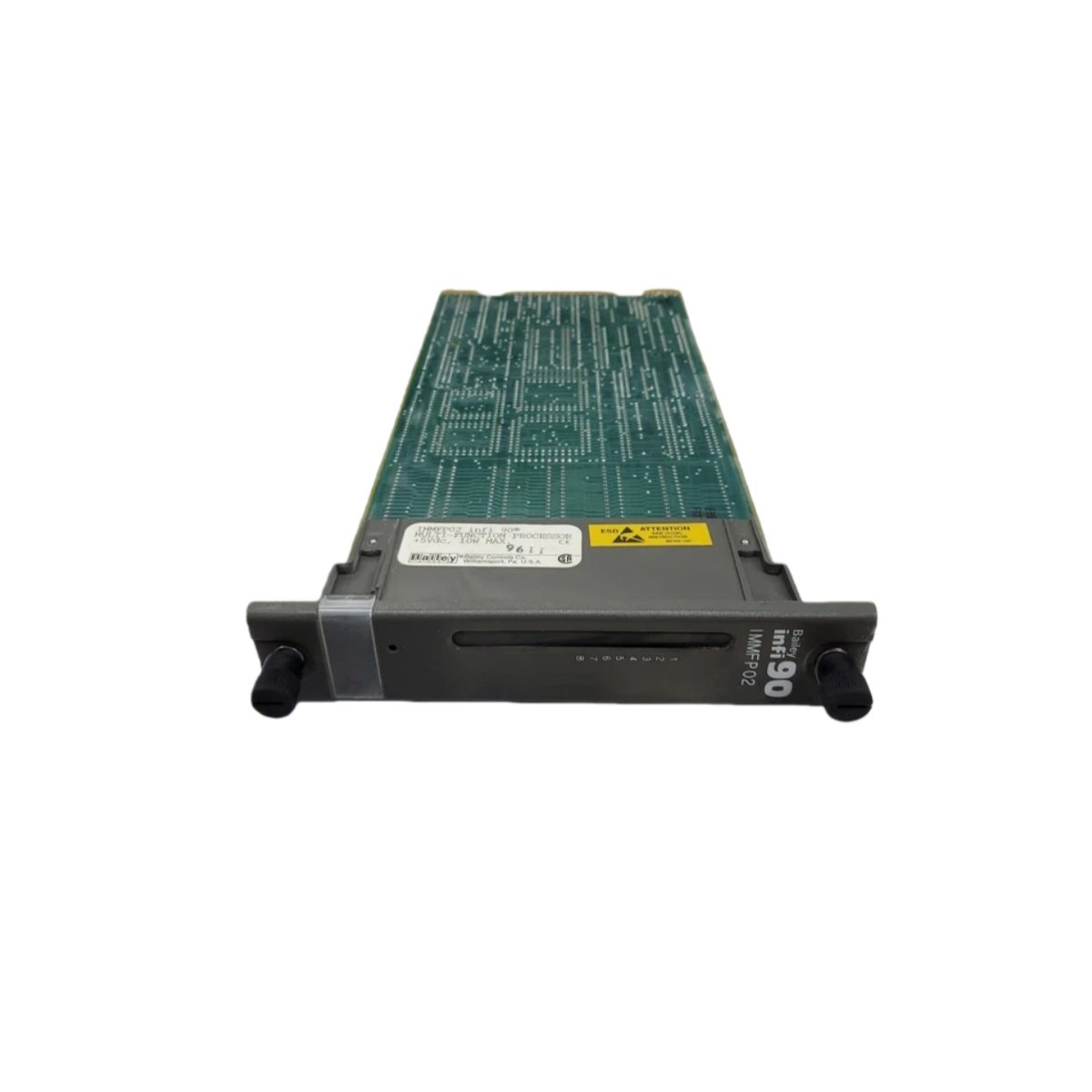
This multi-function processor module delivers advanced computational power for demanding industrial automation frameworks. The ABB IMMFP02 excels at executing complex control strategies within ABB’s distributed control systems. It serves as a reliable core for logic solving, data acquisition, and sequential event processing. Engineers can deploy this unit in power generation, oil and gas, or manufacturing environments. Its architecture supports both peer-to-peer communication and hierarchical network topologies seamlessly.
Core Processing Engine and Memory Resources
The module integrates a high-speed 32-bit processor running at 48 MHz. This clock speed enables rapid execution of intricate PID algorithms and interlock logic. Onboard memory consists of 8 MB of flash memory for firmware storage. Additionally, the unit provides 16 MB of DRAM for runtime data and user-defined function blocks. A dedicated 1 MB SRAM section uses a replaceable battery for data persistence. This battery-backed memory retains critical process parameters and historical trends during power interruptions. The processor handles floating-point calculations with exceptional efficiency and accuracy. Such capabilities suit applications requiring tight loop control and fast analog signal processing.
Communication Interfaces and Connectivity Options
For versatile system integration, the module includes multiple communication channels. One RS-232-C serial port supports local configuration, firmware updates, and diagnostic polling. A second RS-485 port enables multidrop connections to remote I/O racks or intelligent field devices. The module also incorporates a dedicated Module Bus interface for high-speed data exchange with adjacent controllers. This interface transfers data at rates up to 2 Mbps for deterministic network performance. Furthermore, an optional Ethernet adapter allows integration into plant-wide TCP/IP networks when required. These connectivity choices offer flexibility for both new installations and system upgrades.
Integrated I/O and Signal Handling Features
The ABB IMMFP02 includes onboard digital processing capabilities for simplified local control. It offers 24 digital input channels and 24 digital output channels with optical isolation. Each channel handles signals up to 24 V DC with a maximum current of 0.5 A. The module also supports eight analog input channels with 12-bit resolution for sensor interfacing. Four analog output channels provide 0-10 V or 4-20 mA signals for actuator control. All I/O points include LED status indicators for immediate visual verification of signal states. This integrated design reduces the total component count in smaller control cabinets. System architects can minimize external termination hardware and simplify wiring layouts significantly.
Physical Dimensions and Power Requirements
The module measures 58 millimeters in height, 368 millimeters in width, and 300 millimeters in depth. This form factor occupies a standard 9-slot position within the ABB chassis system. The unit weighs approximately 2.6 kilograms, reflecting its robust metal casing and internal shielding. Power consumption averages 45 watts from the +5 V DC backplane supply. Peak current draw reaches 9 amperes during startup initialization sequences. The module dissipates heat efficiently through its passive cooling design. Operating temperature ranges from -10 °C to +60 °C for reliable performance in diverse environments. Storage conditions extend from -40 °C to +85 °C without damaging sensitive components.
Environmental Robustness and Long-Term Reliability
Industrial facilities expose equipment to vibration, humidity, and thermal cycling constantly. The ABB IMMFP02 withstands these stresses through its ruggedized construction and conformal-coated boards. Relative humidity tolerance spans 5% to 95% without condensation forming on internal surfaces. The onboard lithium battery maintains SRAM integrity for a minimum of five years under normal usage. This extended battery life reduces maintenance frequency and associated labor costs effectively. The module also includes built-in self-diagnostics for continuous health monitoring. Fault indicators alert operators to potential issues before they escalate into system failures. Such proactive reliability engineering minimizes unplanned downtime and protects production targets consistently.
Details
| Weight | 0.65 kg |
|---|---|
| Dimensions | 50 × 160 × 120 mm |