
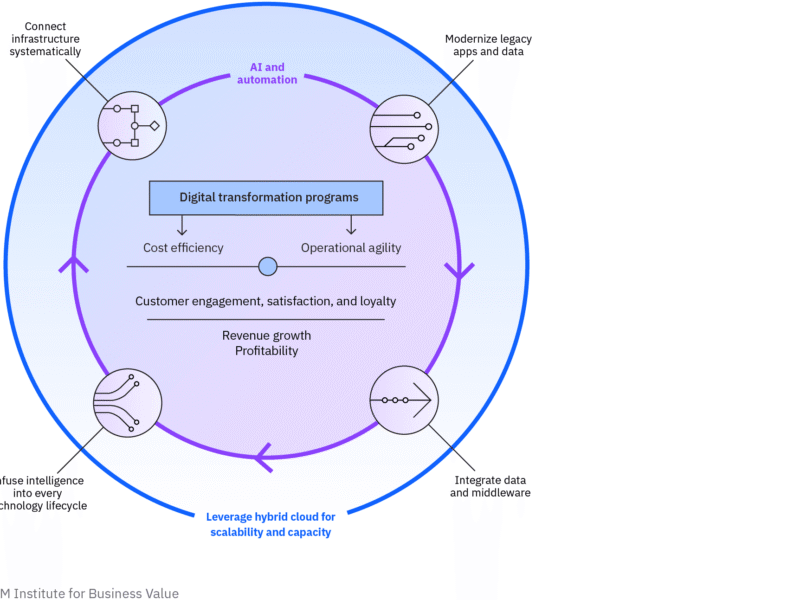
Industrial automation, including PLCs, DCS, and control systems, is rapidly evolving. Organizations increasingly leverage intelligent IT automation to reduce complexity, optimize workflows, and maximize business value. Implementing AI-driven solutions across IT and operations transforms productivity, accelerates innovation, and enhances cybersecurity.
Understanding the Impact of IT Complexity in Industrial Automation
Industrial IT environments often suffer from disconnected systems and outdated infrastructure. However, intelligent automation enables enterprises to unify processes and integrate data seamlessly. As a result, companies reduce redundant workflows, minimize operational risk, and improve resource utilization.
Recent studies show that highly automated industrial organizations achieve a 28% reduction in IT costs and a 16% faster time-to-market for critical solutions. Therefore, addressing shadow IT and technical debt is essential for maximizing IT efficiency and supporting strategic growth initiatives.
End-to-End Workflows Enable Smarter Control Systems
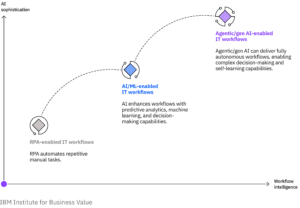
End-to-end automation in industrial enterprises allows AI agents to autonomously manage routine tasks, from data acquisition to system diagnostics. Generative AI embedded in DCS or PLC monitoring processes enhances decision-making and reduces human intervention.
Moreover, organizations adopting agentic AI report higher integration across industrial control systems, improved data governance, and accelerated cloud adoption. These improvements directly contribute to revenue growth, operational cost reduction, and improved compliance with safety and cybersecurity standards.
Leveraging Hybrid Cloud for Scalable Industrial IT
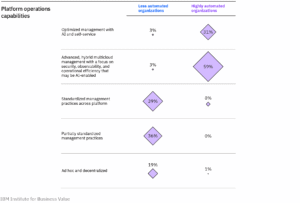
Hybrid cloud environments serve as the backbone for AI-enabled IT operations in industrial enterprises. By combining on-premises control systems with cloud infrastructure, companies achieve real-time visibility into operational metrics, enabling predictive maintenance and proactive risk management.
Highly automated organizations complete over 75% of their cloud migration, allowing AI agents to optimize resource allocation and automate workflow orchestration. As a result, these enterprises can respond faster to operational challenges while maintaining security and reducing complexity.
AI-Powered IT Optimizes Industrial Operations
AI-driven IT automation empowers enterprises to scale operations efficiently. Intelligent workflows optimize PLC and DCS system monitoring, control signal processing, and alarm management. Companies report a 90% ROI when generative AI is broadly integrated into IT processes.
Additionally, cybersecurity improves as AI agents proactively identify threats, standardize processes, and reduce system vulnerabilities. Two-thirds of highly automated industrial enterprises reduce their attack surface and mitigate risks effectively through AIOps and intelligent automation.
Modernization and Integration as Strategic Priorities
Industrial IT modernization requires updating legacy applications, data infrastructure, and middleware. Organizations must systematically integrate these elements to enable AI-powered workflows. Using DevSecOps, Infrastructure as Code (IaC), and continuous integration/deployment ensures reliable, secure, and scalable operations.
In addition, standardizing workflows and integrating data across PLCs, DCS, and MES systems improves decision-making and operational efficiency. Enterprises that prioritize modernization reduce downtime, increase agility, and create space for innovation in factory automation.
Practical Steps to Implement Intelligent IT Automation
- Modernize Legacy Systems: Prioritize applications and data based on criticality, automate routine workflows, and reduce technical debt.
- Connect Infrastructure Systematically: Automate provisioning, monitor system health, and enforce role-based security policies.
- Integrate Data and Middleware: Create reusable workflow templates, standardize data access, and enable secure real-time analytics.
- Infuse Intelligence into Every Process: Deploy generative AI for predictive maintenance, anomaly detection, and process optimization.
- Measure and Optimize ROI: Use dashboards and FinOps tools to track AI-driven efficiency gains, reinvesting savings into further automation.
Applications in Industrial Automation
- Manufacturing: AI-enabled workflows optimize production lines and predictive maintenance on PLC-controlled machinery.
- Oil & Gas: Generative AI automates monitoring of DCS and safety-critical systems, reducing downtime and operational risk.
- Utilities: Infrastructure automation improves grid reliability, minimizes manual interventions, and supports real-time operational decisions.
Conclusion
Intelligent IT automation is no longer optional—it is essential for industrial enterprises seeking growth, efficiency, and competitive advantage. By integrating AI, cloud, and automation across IT and industrial control systems, companies achieve faster innovation cycles, reduce costs, and enhance operational resilience.
Investing strategically in AI-driven IT enables enterprises to unlock measurable business value while preparing for the evolving demands of industrial automation.