
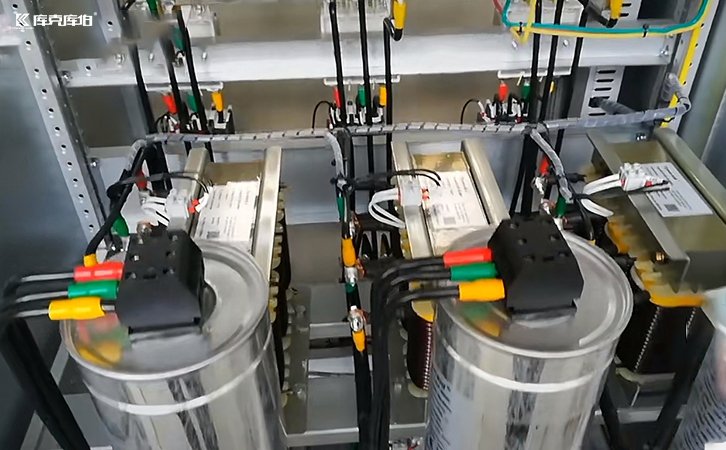
Rising Demand for Line and Load Reactors in Industrial Automation
The global line and load reactor market grows rapidly due to the increasing adoption of variable frequency drives (VFDs). Moreover, industries require reactors to suppress harmonics and protect motors. As a result, power quality improves while supporting industrial automation and renewable energy integration. In addition, reactors help factories maintain operational efficiency and reduce maintenance costs.
According to SNS Insider, the market reached $178.23 million in 2025 and is expected to grow to $242.57 million by 2033, reflecting a CAGR of 3.93%. Consequently, companies are investing in high-performance reactor solutions to ensure reliable energy delivery.
Regional Market Insights and Growth Drivers
In the United States, the line and load reactor market is projected to grow at a CAGR of 5.75%, reaching $57.05 million by 2033. Furthermore, reactors play a key role in maintaining voltage stability and suppressing harmonics. To support industrial and renewable energy systems, they also protect sensitive motors from damage. As a result, modern facilities increasingly depend on these solutions for operational reliability.
Nuclear and industrial power infrastructure expansion drives global demand. For instance, Russia emphasizes advanced nuclear technologies, including fast reactors and closed fuel cycles. Therefore, reactors remain critical for reducing harmonics and ensuring voltage stability in high-power installations.
Leading Companies in the Market
Key market players include ABB, TDK, TE Connectivity, MTE Corporation, Shanghai Yingtin Electronics, Hammond Power Solutions, Schaffner, Rockwell Automation (Allen-Bradley), KEB, Siemens, and Eaton. In addition, these companies provide industrial automation solutions that integrate reactors with VFDs and renewable energy systems. Moreover, their technologies enhance power quality and system reliability across multiple sectors.
Market Segmentation by Type, Application, and Technology
By Type:
Reactors with current ratings below 100A dominate the market in 2025 with 58.13% share. This leadership stems from their cost efficiency and wide industrial compatibility. Meanwhile, reactors rated above 100A are expected to grow fastest, achieving a CAGR of 7.02%, driven by high-capacity industrial, renewable, and utility applications.
By Application:
General industrial usage holds a 34.38% share in 2025, covering manufacturing plants, processing facilities, and factory automation systems. In contrast, the power industry will grow fastest at 5.70% CAGR, fueled by renewable energy expansion, utility modernization, and large industrial projects.
By Technology:
Dry-type reactors capture a 39.38% market share, offering high safety, low maintenance, and compact design. Furthermore, gas-insulated reactors are projected to grow at 7.19% CAGR, meeting demands for compact, efficient solutions in modern industrial and smart grid facilities.
By Function:
Line reactors account for 39.75% of market share in 2025, used widely for voltage stabilization and harmonic suppression. In addition, load reactors are projected to grow at 5.03% CAGR, addressing increasing power quality requirements in advanced industrial systems.
Regional Outlook
The Asia-Pacific region leads in 2025 with 33.60% market share, driven by rapid industrialization, renewable energy adoption, and high-capacity power infrastructure. Meanwhile, North America shows the fastest growth, with a 7.67% CAGR, supported by industrial automation, grid modernization, and extensive renewable energy deployment.
Industry Trends and Recent Developments
In February 2025, TE Connectivity announced a $2.3 billion acquisition of Richards Manufacturing, strengthening its utility grid portfolio. This acquisition addresses the growing power demands of data centers, projected to nearly double by 2028. As a result, TE Connectivity expands its capability to deliver reliable reactor solutions for high-demand applications.
Unique Market Insights
The report provides actionable insights for decision-makers:
- Technology Adoption Metrics: Track shifts between dry-type and oil-immersed reactors, R&D trends, and patent activity.
- Performance and Reliability Benchmarks: Compare voltage/current limits, harmonic suppression, and MTBF-based reliability.
- Supply Chain and Capacity Index: Assess core, winding, and insulation production efficiency, lead times, and supplier diversification.
- Operational Cost & Energy Efficiency Analysis: Evaluate per-unit energy consumption, labor ratios, and maintenance costs.
- Manufacturing Economics: Analyze material, labor, and utility contributions to total reactor costs.
- Competitive Innovation Landscape: Measure new product launches, efficiency gains, and technology differentiation strategies.
Expert Insight
As industrial automation and renewable energy systems expand, line and load reactors play a crucial role in ensuring reliable power, improving energy efficiency, and prolonging equipment lifespan. Moreover, adopting high-capacity reactors allows companies to meet modern industrial demands while maintaining system stability. In addition, investing in advanced reactor technology supports sustainable growth and operational excellence.
Application Scenarios
- Factory Automation: Ensures smooth VFD operation while protecting critical motors.
- Renewable Energy Systems: Enhances harmonic suppression and grid stability.
- Industrial Power Systems: Maintains voltage regulation and extends equipment lifespan.
- Data Centers: Supports high-demand power systems while ensuring energy quality.